dayileyvasJuly 22, 20263 Mins read285
USDOT Launches AI Initiative to Improve Freight Movement and Roads
The U.S. Department of Transportation (USDOT) has launched a new AI Initiative aimed at modernizing the nation’s transportation system through artificial intelligence. While the announcement does not introduce new regulations for truck drivers or motor carriers, the agency says the effort could eventually improve freight movement, reduce traffic bottlenecks, and make highways and bridges more reliable.
Announced on July 22, the initiative is part of a broader federal effort to accelerate the use of artificial intelligence across several industries. For transportation, USDOT says AI will be used to improve how roads, bridges, and other infrastructure are planned, built, maintained, and operated.
For commercial trucking, the changes are expected to be long-term rather than immediate.
AI Initiative Aims to Improve Freight Transportation
According to USDOT, one of the primary goals of the AI Initiative is to strengthen the nation’s freight transportation network.
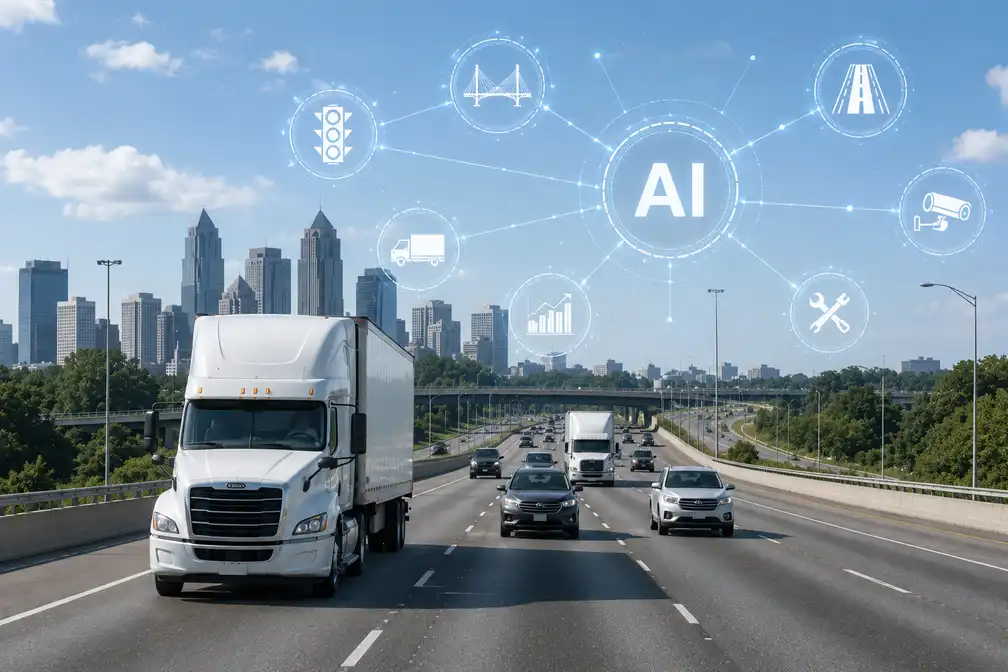
The department says artificial intelligence could help transportation agencies better understand traffic patterns, identify bottlenecks before they become major problems, and optimize how freight moves across the country.
Officials also say AI may improve traffic management, helping reduce delays caused by congestion on major freight corridors.
Although the announcement does not identify specific highway projects, USDOT says the technology could eventually support faster decision-making and improve the efficiency of transportation systems nationwide.
How Truck Drivers Could Benefit
The AI Initiative does not change any rules for commercial drivers, but several of its goals could benefit the trucking industry over time.
USDOT says artificial intelligence could help:
- Reduce traffic congestion on major highways
- Improve freight movement across transportation networks
- Shorten road and bridge construction projects
- Predict infrastructure problems before they require emergency repairs
- Extend the life of highways and bridges
- Lower infrastructure maintenance costs
If those goals are achieved, truck drivers could spend less time sitting in traffic, encounter fewer unexpected road closures, and travel on roads that are maintained more proactively.
Owner-operators and motor carriers could also benefit from more predictable travel times and improved route reliability.
Predictive Maintenance Is a Key Part of the AI Initiative
One of the most significant aspects of the announcement is USDOT’s plan to use artificial intelligence for predictive maintenance.
Instead of waiting until roads or bridges show serious deterioration, AI systems could analyze large amounts of infrastructure data to identify potential problems earlier.
The agency says this approach may allow repairs to be scheduled before conditions become critical, reducing the need for emergency maintenance projects that often disrupt traffic and freight operations.
For trucking companies, that could mean fewer unexpected lane closures and more consistent highway conditions over time.
Part of a Broader Technology Strategy
The AI Initiative is the latest in a series of USDOT efforts focused on using emerging technologies to improve America’s transportation infrastructure.
In recent months, the department has also announced programs exploring robotics, automated infrastructure inspections, and other advanced technologies designed to improve highway maintenance and project delivery.
While these initiatives are still in their early stages, they reflect a broader effort to modernize the transportation network using data-driven tools rather than relying solely on traditional maintenance methods.
What Happens Next?
USDOT has not announced a timeline for specific projects or identified which highways or freight corridors could be the first to benefit from the AI Initiative.
The department says the program will support the development of artificial intelligence tools that can help transportation agencies make better decisions, improve infrastructure performance, and strengthen the nation’s freight network over the long term.
For truck drivers, the initiative is unlikely to change day-to-day operations in the near future. However, if the technology delivers the improvements outlined by USDOT, it could eventually lead to smoother freight movement, fewer traffic delays, and more reliable highway infrastructure.
Bottom Line
The new AI Initiative represents a long-term investment in transportation technology rather than an immediate change for commercial trucking.
Although truck drivers will not see new regulations or operational requirements as a result of the announcement, USDOT says artificial intelligence could eventually help reduce congestion, improve road maintenance, shorten construction projects, and support more efficient freight movement across the United States.
If those goals are achieved, the initiative could have lasting benefits for truck drivers, owner-operators, motor carriers, and the broader freight industry.