dayileyvasNovember 24, 20263 Mins read21
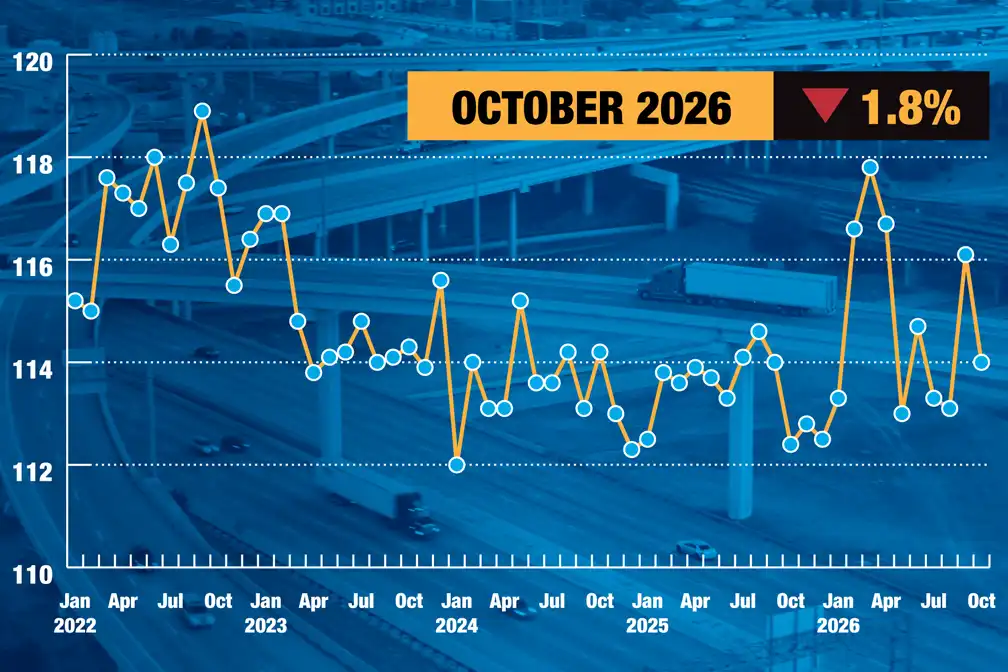
Truck Tonnage Index Falls 1.8% in October
The U.S. trucking industry experienced a decline in freight activity in October 2026 after a strong increase in September. However, freight volumes remained higher than during the same period last year, suggesting some improvement in the trucking market despite ongoing fluctuations.
According to a November 24 report from the American Trucking Associations (ATA), the seasonally adjusted For-Hire Truck Tonnage Index fell 1.8% in October following a revised 2.7% increase in September. The latest figures present a mixed picture of freight demand as the trucking industry moves through the final quarter of 2026.
Truck Tonnage Index Declines After September Gains
The seasonally adjusted Truck Tonnage Index reached 114.0 in October, compared with 116.1 in September. The index uses 2015 as its base year, with a value of 100.
The October report revealed several key findings:
- Truck tonnage decreased 1.8% from September.
- Freight tonnage increased 1.8% compared with October 2025.
- Year-to-date tonnage increased 1.1% compared with the same period last year.
- Unadjusted truck tonnage increased 1.9% from September.
ATA also revised its September figures upward. The association originally reported a monthly increase of 0.8%, which has now been revised to 2.7%. While October reversed some of September’s gains, the latest results indicate that freight activity has not lost all of its recent progress.
Truck Freight Volumes Remain Above Last Year’s Levels
Despite the monthly decline, October marked the second consecutive month of year-over-year growth. This represents an improvement from the weaker conditions reported during parts of the summer, when trucking activity struggled to maintain consistent gains.
Year-over-year comparisons help place monthly changes into perspective. Freight demand can fluctuate throughout the year due to seasonal shipping patterns, manufacturing activity, consumer demand, and holiday preparations.
Although October’s decline shows that freight growth remains uneven, the annual increase provides a more positive comparison with market conditions in 2025. However, the results alone do not establish that the trucking industry has entered a sustained recovery.
Imports and Consumer Spending Support Freight Demand
ATA Chief Economist Bob Costello identified several economic factors that contributed to the annual increase in freight tonnage. These included rising imports, moderate improvements in manufacturing output, and continued growth in consumer spending.
Each of these economic activities plays an important role in generating trucking demand. Imported goods often require transportation from ports and distribution centers to warehouses and retail locations. Manufacturing activity generates freight movement involving raw materials, equipment, and finished products.
Meanwhile, consumer spending influences the volume of goods retailers need to replenish their inventories. Changes in these areas can affect freight availability across different trucking sectors. However, improvements in one sector may not result in stronger demand across every equipment type or freight lane.
Unadjusted Truck Tonnage Increases in October
While the seasonally adjusted Truck Tonnage Index declined, the unadjusted index showed an increase. The unadjusted index measures freight activity without removing regular seasonal fluctuations. Seasonal adjustments help economists evaluate underlying market trends by accounting for predictable changes throughout the year.
The difference between the two measurements is particularly important during the final months of the year, when holiday shipping can influence freight activity. An increase in unadjusted tonnage alongside a decrease in adjusted tonnage does not necessarily indicate conflicting results. Instead, the measurements provide different perspectives on trucking activity.
What the Truck Tonnage Index Means for Truck Drivers
ATA’s tonnage report provides an important measure of freight market conditions. However, the index primarily reflects contract freight rather than traditional spot market activity. This distinction is especially important for independent truck drivers and owner-operators who rely heavily on load boards and broker-posted freight.
Changes in contract freight volumes may not immediately translate into similar changes in spot market load availability or freight rates. Carrier capacity also influences market conditions. When fewer trucks are available to transport freight, rates may improve even without significant growth in overall freight volumes.
Similarly, an increase in freight tonnage does not automatically guarantee higher driver earnings. Operating expenses, fuel prices, equipment costs, insurance, and unpaid miles remain important factors affecting trucking profitability.
Trucking Remains Essential to the U.S. Economy
ATA’s recently published American Trucking Trends 2026 report highlights the industry’s continued importance to the national economy.
According to the report, the trucking industry recorded the following results in 2025:
- Trucks transported 11.46 billion tons of freight.
- Trucking industry revenue reached $936.4 billion.
- Approximately 3.45 million professional truck drivers worked in the industry.
- Around 91.1% of motor carriers operated 10 or fewer trucks.
The figures demonstrate the importance of small trucking businesses within the nation’s freight transportation network. For these businesses, changes in freight demand and operating costs can have a significant impact on financial stability.
Freight Market Conditions Remain Mixed
The latest Truck Tonnage Index shows that the trucking industry continues to experience uneven freight activity. While October’s decline interrupted September’s strong performance, the year-over-year increase indicates that freight volumes remain above last year’s levels.
The October figures are preliminary and may change when ATA publishes its final monthly report in early December. Upcoming freight data will help determine whether the October decline represents a temporary slowdown or the beginning of a weaker period for the trucking industry.