dayileyvasOctober 22, 20264 Mins read10
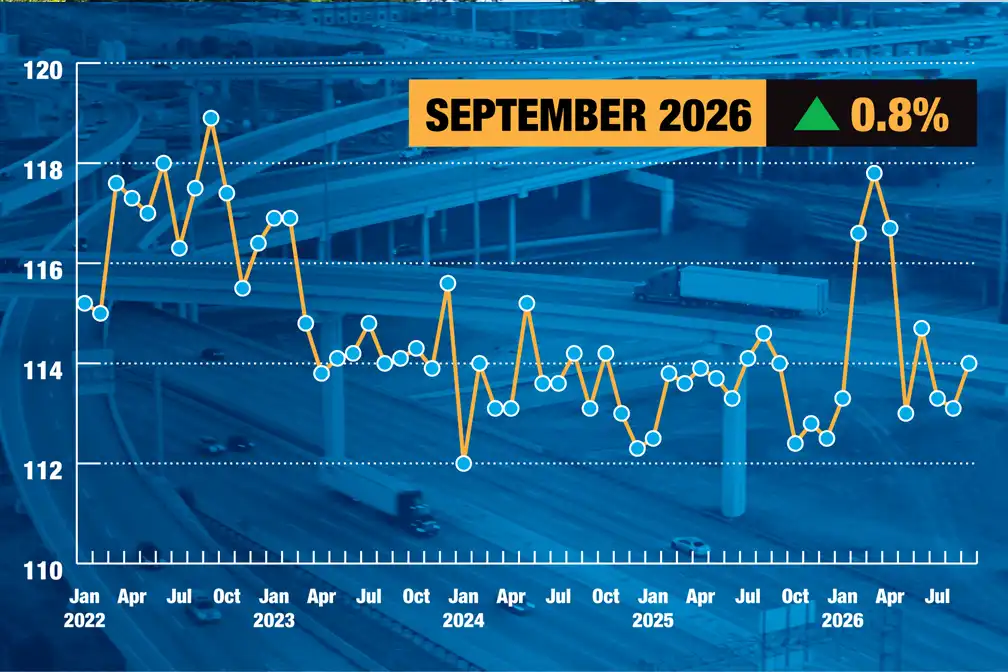
Truck Tonnage Index Rises 0.8%, but Freight Remains Weak
The Truck Tonnage Index increased in September 2026, showing a modest improvement in U.S. trucking activity after two months of declines. However, freight demand remained weak, and the industry continued to face challenges heading into the final quarter of the year.
According to the American Trucking Associations (ATA), its advanced seasonally adjusted For-Hire Truck Tonnage Index rose 0.8% in September. The increase followed a revised 0.2% decline in August.
Despite the monthly improvement, truck tonnage was unchanged from September 2025. The results suggest that freight volumes have stabilized somewhat, but a stronger recovery has yet to develop.
Truck Tonnage Index Climbs to 114 in September
ATA reported that its seasonally adjusted Truck Tonnage Index reached 114 in September, compared with 113.1 in August.
The index uses 2015 as its base year, with a value of 100. It measures changes in the amount of freight hauled by for-hire trucking companies.
The latest report highlighted several important changes:
- Monthly change: Truck tonnage increased 0.8% from August to September.
- Annual change: Tonnage was unchanged compared with September 2025.
- Year-to-date: Freight tonnage increased 0.9% during the first nine months of 2026 compared with the same period in 2025.
- August revision: ATA revised August’s monthly decline to 0.2%, improving on its initial estimate of a 0.5% decrease.
- Unadjusted index: The index fell 1.4% in September to 114.8, compared with 116.4 in August.
The difference between the adjusted and unadjusted figures reflects seasonal patterns in freight transportation.
Seasonal adjustments help economists compare activity between months without distortions from predictable changes in shipping patterns.
Freight Demand Remains Weak Despite September Increase
Although September brought an improvement, the broader freight market remained under pressure during the third quarter. ATA Chief Economist Bob Costello explained that weaker activity in July and August outweighed September’s gains.
“Truck tonnage ended the quarter on a better note, but weakness in July and August pushed the third quarter reading into negative territory both sequentially and from a year earlier,” Costello said.His comments indicate that the industry experienced an overall decline during the third quarter compared with both the previous quarter and the same period in 2025.
The September increase also did little to change the broader annual picture. ATA reported that truck tonnage was only 0.9% higher during the first nine months of 2026 compared with 2025. Much of that improvement came from stronger year-over-year growth between February and April. This means the industry’s modest annual gains were largely supported by freight activity earlier in the year rather than a sustained increase during recent months.
Shrinking Trucking Capacity Changes Market Conditions
One of the most important findings in ATA’s report concerns the relationship between freight demand and available trucking capacity. Although freight volumes remain relatively soft, the number of trucks available to move freight continues to decline. Costello noted that this reduction in capacity is helping improve conditions for trucking companies.
“We are seeing soft tonnage levels, but capacity is still contracting, which is leading to a better market for motor carriers,” he said.
Trucking capacity refers to the number of trucks and carriers available to transport freight. When capacity declines, fewer trucks compete for available loads. This can help stabilize freight rates, even when shipping demand remains weak. However, improving market conditions do not necessarily mean that more freight is moving.
The distinction is important because a market recovery driven by fewer available trucks differs from one supported by stronger freight demand. For carriers, reduced competition may provide some pricing support. For truck drivers, however, the availability of loads still depends on freight demand, equipment type, and regional shipping activity.
What the Truck Tonnage Index Measures
ATA’s Truck Tonnage Index is one of the industry’s indicators of freight transportation activity. The association has collected trucking tonnage data through surveys of its members since the 1970s.
The index primarily reflects contract freight rather than loads moving through the traditional spot market. Contract freight generally moves under established agreements between shippers and trucking companies. Spot freight typically involves loads arranged for individual shipments.
Because of this distinction, ATA’s monthly tonnage report does not directly measure spot market load postings or freight rates. Instead, it provides a broader view of changes in the weight of freight transported by participating for-hire carriers.
The index is also considered an economic indicator because trucking transports a substantial share of goods moving throughout the United States. According to ATA, trucks accounted for 72.7% of domestic freight tonnage across all transportation modes. In 2024, trucks transported approximately 11.27 billion tons of freight.
Motor carriers generated $906 billion in revenue that year, representing 76.9% of total freight transportation revenue. These figures highlight trucking’s importance to manufacturing, retail, distribution, and other major sectors of the economy.
What September’s Results Mean for Truck Drivers
September’s increase provides some evidence of stabilization following weaker trucking activity during the summer. However, the results do not establish that freight demand has entered a sustained recovery. The latest figures show that truck tonnage remained unchanged from a year earlier, while the third quarter ended with an overall decline.
For drivers working in the for-hire trucking sector, freight volumes remain an important factor affecting load availability and equipment utilization. At the same time, declining trucking capacity could gradually change the balance between available freight and the number of trucks competing for it.
Those changes may influence carrier pricing and operating conditions, although the effects will vary across different freight markets. The ATA report does not provide specific information about driver pay, individual freight lanes, or spot rates.
Trucking Industry Enters Final Quarter With Mixed Signals
The September Truck Tonnage Index offers a mixed picture of the U.S. freight market. Monthly trucking activity improved, and year-over-year performance was stronger than in August. However, the overall third-quarter results remained negative.
Meanwhile, shrinking trucking capacity continues to provide some support for motor carriers despite limited freight growth. ATA’s September figures are preliminary and may be revised in its final monthly report. The coming months will help show whether September’s improvement marks the beginning of stronger freight activity or another temporary increase in a still-weak market.