Vincent ShakirSeptember 22, 20264 Mins read138
New Freight Results Show Truck Tonnage Moving Down
Truck tonnage continued to weaken in August, but the broader trucking market may still be improving for a different reason.
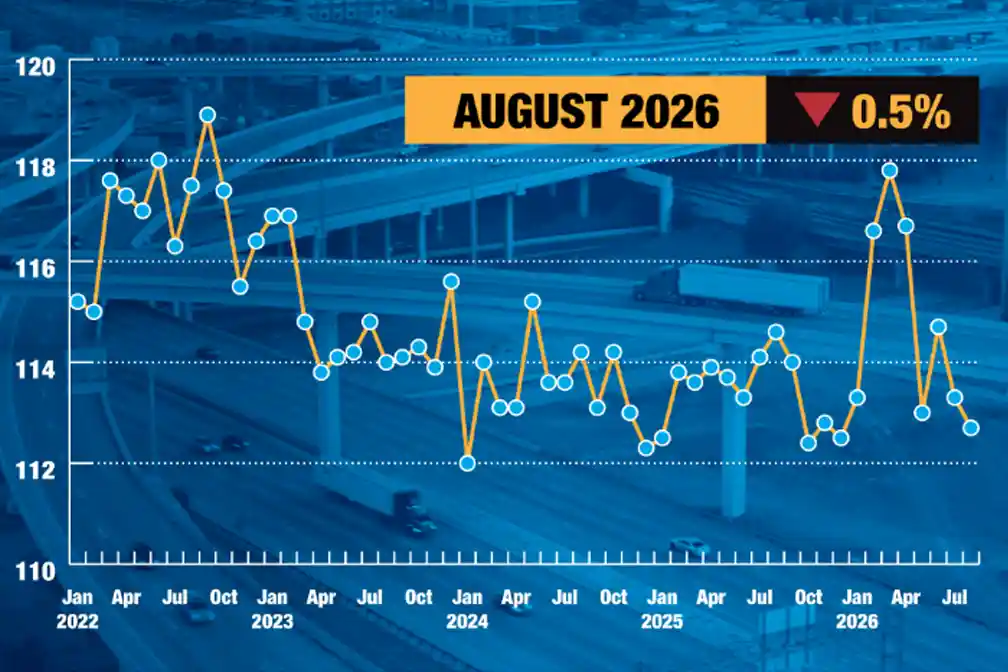
The American Trucking Associations (ATA) reported that its advanced seasonally adjusted For-Hire Truck Tonnage Index fell 0.5% in August after dropping 1.2% in July. However, ATA Chief Economist Bob Costello said the market shift appears to be driven more by reduced trucking capacity than by stronger freight demand.
That distinction could matter for truck drivers, owner-operators, and motor carriers trying to understand whether trucking is entering a true freight recovery.
Truck Tonnage Falls for Fourth Time in Five Months
ATA said its seasonally adjusted For-Hire Truck Tonnage Index reached 112.7 in August. That was down from 113.3 in July.
August truck tonnage was also 1.6% below the same month in 2025. The year-over-year decline was larger than July’s 0.7% drop.
Recent results show a broader downward trend. Truck tonnage has now fallen during four of the past five months.
Tonnage is also down 4.3% from its recent peak in March.
Those figures suggest that freight demand weakened during much of the spring and summer.
However, ATA said the trucking market itself has generally improved despite lower freight levels.
ATA Says Reduced Capacity Is Changing the Market
Costello said the trucking market has “flipped” this year, but not because freight demand has suddenly become strong.
“The truck market has certainly flipped this year, but recent tonnage levels confirm this is due to reduced capacity, not robust demand,” Costello said.
That creates an unusual trucking environment.
Normally, stronger market conditions are linked to more freight moving through the system. More loads can increase truck use and raise demand for available equipment.
ATA’s latest truck tonnage report suggests something different is happening.
Freight levels remain weak, but the amount of available trucking capacity has also fallen. With fewer trucks competing for freight, market conditions can improve even without a large increase in shipments.
For the trucking industry, that means lower freight volumes do not necessarily tell the full story.
What Lower Truck Tonnage Could Mean for Drivers
For company truck drivers, weaker freight can still create challenges.
Lower truck tonnage may mean fewer available loads in some markets. That can affect driver miles, equipment use, and the amount of freight moving through certain terminals or regions.
The impact will likely vary by carrier, customer base, and freight segment.
At the same time, tighter trucking capacity could help balance the market. If fewer trucks are available to handle existing freight, carriers that remain active may face less competition for loads.
That could help support truck use even when total freight demand remains soft.
The key issue for drivers is therefore not only how much freight is available. The number of trucks competing for that freight also matters.
Owner-Operators May Watch Capacity Closely
The capacity trend may be especially important for owner-operators.
Independent operators are highly exposed to changes in freight supply and competition among available trucks.
When truck tonnage falls while capacity remains high, more trucks may compete for fewer loads. That can create difficult operating conditions.
However, the market can shift when capacity declines.
If the number of available trucks falls faster than freight demand, competition for remaining loads may ease. That can strengthen the position of carriers and owner-operators that remain in the market.
ATA’s latest report indicates that this capacity shift may already be affecting trucking conditions.
Still, falling truck tonnage shows that freight demand itself has not returned to consistently strong levels.
Year-to-Date Truck Tonnage Remains Higher
Despite recent declines, ATA said truck tonnage remains 1% higher through August compared with the same period in 2025.
That increase mainly reflects stronger year-over-year results earlier in the year.
ATA reported robust annual gains between February and April. More recent months have been weaker.
Truck tonnage has fallen from year-earlier levels during three of the past four months.
The contrast shows why year-to-date numbers can appear stronger than current trucking conditions.
The industry entered the year with stronger freight activity, but the trend has cooled since spring.
July Truck Tonnage Revised Lower
ATA also revised its July tonnage estimate.
The organization now says seasonally adjusted truck tonnage fell 1.2% in July. That decline was larger than initially reported.
The revision adds to the pattern of weaker freight volumes during recent months.
ATA’s not seasonally adjusted index also declined in August. That index reached 116.1, down 0.6% from 116.7 in July.
The unadjusted index measures the actual change in freight tonnage without seasonal adjustments.
Contract Freight Plays a Major Role in ATA Index
ATA noted that its tonnage indexes are heavily influenced by contract freight rather than traditional spot-market freight.
That makes the truck tonnage report particularly relevant to motor carriers and fleets that depend heavily on long-term shipper contracts.
The index is based on surveys of ATA members and has been calculated since the 1970s.
August’s figures remain preliminary and may be revised when ATA releases its final report.
The monthly report also includes economic comparisons and other financial measures related to freight activity.
Trucking Remains Central to U.S. Freight
Trucking continues to move most domestic freight by tonnage.
ATA said trucks account for 72.7% of the tonnage carried by domestic transportation modes. Trucks moved 11.27 billion tons of freight in 2024.
Motor carriers also collected $906 billion during the year, representing 76.9% of revenue earned across transportation modes.
That makes truck tonnage an important measure of both trucking activity and broader economic movement.
However, the August report shows that freight volume alone may not explain current trucking conditions.
Truck Tonnage Falls as Capacity Tightens
The strongest message from ATA’s August report is not simply that tonnage fell another 0.5%.
Instead, the report suggests that the trucking market is changing because available capacity has tightened.
Truck tonnage has fallen during four of the past five months and remains well below its March level. At the same time, ATA says reduced trucking capacity has helped improve overall market conditions.
For commercial truck drivers, that creates a mixed picture.
Weaker freight could continue to affect miles and load availability in some parts of the industry. However, fewer trucks competing for available freight could also improve conditions for carriers and owner-operators that remain active.
The question now is whether freight demand eventually strengthens to match the tighter capacity already developing across the trucking market.