Vincent ShakirMay 28, 20266 Mins read294
Major Rail Merger Now Paused Over Truckload Claims
Rail Merger Review Is Accepted but Paused
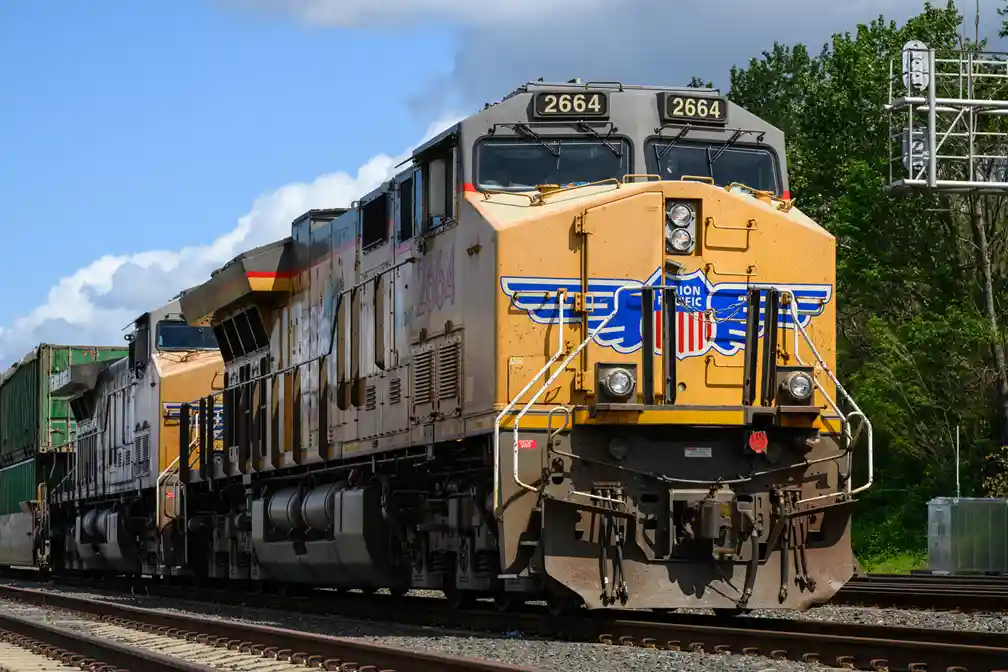
The proposed Union Pacific-Norfolk Southern rail merger is still being presented as a plan that could shift millions of truckloads from highways to rail. But federal regulators are now asking for more proof before allowing the case to move forward.
In a notice scheduled to be published in the Federal Register on May 29, 2026, the Surface Transportation Board said it has accepted the revised rail merger application from Union Pacific Corporation, Union Pacific Railroad Company, Norfolk Southern Corporation, and Norfolk Southern Railway Company.
The application seeks federal approval for Union Pacific to acquire control of Norfolk Southern. If approved, the deal would place the rail operations of both Class I railroads under common control.
However, the STB is not moving the case ahead on a full review schedule yet. The Board is holding the proceedings in abeyance, including the environmental review, while it requires the railroads to provide supplemental information by July 27, 2026.
For the trucking industry, the key issue remains the same: the railroads say the rail merger could divert 2.1 million truckloads from highways to rail each year. Now, regulators want more details behind that claim.
Why This Rail Merger Update Matters to Trucking
Earlier this month, the proposed merger drew attention because Union Pacific and Norfolk Southern said the deal could create a coast-to-coast freight rail network spanning roughly 50,000 miles.
The railroads said the combined system could convert more freight from interline rail service to single-line service. That means some shipments that now move between separate railroads could stay on one rail system from origin to destination.
The companies say this could reduce delays, improve reliability, lower shipping costs, and make rail more attractive for freight that often moves by truck.
That is where the trucking angle becomes important.
Union Pacific and Norfolk Southern estimate the rail merger could shift 2.1 million truckloads from highways to rail. They also estimate shippers could save about $3.5 billion each year from truck-to-rail freight shifts.
Those claims could matter to truckload carriers, owner-operators, intermodal companies, drayage operators, brokers, shippers, and drivers who depend on long-haul freight lanes.
But the STB’s latest notice shows those claims are now under closer review.
A Key Difference From the Earlier Rail Merger Filing
The current notice also provides an important update on the merger’s regulatory path.
The railroads first filed their application in December 2025. The STB rejected that application in January 2026, saying it was incomplete.
One reason was directly tied to the truckload diversion issue. According to the Board, the earlier application did not include market share projections that matched the railroads’ claims that the new company would grow by diverting traffic from trucks and other rail carriers.
The companies later filed a revised application on April 30, 2026. The STB has now accepted that revised application for consideration.
That does not mean the rail merger has been approved. It only means the revised filing is complete enough to be reviewed.
At the same time, the Board said several parts of the filing remain unclear or underdeveloped. The STB said the current record does not yet give the public a meaningful chance to comment on whether the transaction is in the public interest.
That is why the case is paused while the Board seeks more information.
Regulators Want More Detail on Truck-to-Rail Claims
The railroads’ claim that 2.1 million truckloads could move to rail is one of the biggest points in the case.
The STB is asking the applicants to explain more about the public benefits they project from the rail merger. That includes how the companies would achieve those benefits within the first three years after the merger is completed.
The Board also wants more information about the infrastructure and operating assets needed to handle projected traffic growth. That could include sidings, mainline track, yard expansions, shipper facility investments, containers, railcars, and chassis.
For trucking companies, that matters because a freight shift of this size would depend on whether the rail system can actually handle the added volume.
If the railroad network cannot handle projected growth as planned, the promised truck-to-rail shift may not happen on the timeline the companies expect.
Long-Haul Freight Is at the Center of the Rail Merger
The STB notice includes details that make the trucking impact more specific.
According to the Board, Hunt’s truck-to-rail diversion analysis shows an average length of haul of 2,070 door-to-door miles for 1.203 million annual trucks projected to convert to intermodal rail. The Board also noted that nearly 80% of the projected truck-to-rail diversions are 1,500 miles or longer.
That makes the issue especially relevant to long-haul trucking.
Short-haul freight, local delivery, last-mile work, and many time-sensitive loads would still depend heavily on trucks. But long-distance freight is where rail and trucking often compete more directly.
If the rail merger is approved and the railroads deliver on their plan, some long-haul freight that now moves by truck could move by rail for the middle portion of the trip. Trucks would still be needed for pickup, delivery, drayage, and regional distribution, but the linehaul portion could shift in some lanes.
That could create different effects across the trucking industry. Some long-haul carriers could face more rail competition. At the same time, intermodal carriers and drayage operators near rail ramps and terminals could see new freight opportunities.
STB Compares Rail Merger Claim to Past Deal
The STB also pointed to an important comparison involving the Canadian Pacific-Kansas City Southern merger.
In that case, the applicants forecast converting 64,000 trucks per year from highway to rail. The Board noted that three years after that merger was completed, the goal had not yet been reached.
By comparison, Union Pacific and Norfolk Southern are projecting 2.1 million truck-to-rail conversions.
That comparison does not mean the current projection is impossible. But it shows why regulators are asking for more detail.
The STB is looking at whether the applicants can support their projections with enough evidence, especially given the scale of the proposed freight shift.
For the trucking industry, this is one of the most important parts of the update. The projected truckload shift is much larger than the forecast in the most recent Class I rail merger, and the Board is not treating it as a settled outcome.
Freight Competition Remains a Major Question
The proposed rail merger is not only about railroad operations. It is also about freight competition.
Union Pacific and Norfolk Southern argue that the merger would make rail more competitive against trucks and other rail carriers. They say single-line service could reduce friction between carriers and make rail more useful for shippers.
Competing railroads and other stakeholders have raised concerns about the revised application. The STB notice lists comments from several parties, including BNSF, CPKC, CSX Transportation, CN, the National Grain and Feed Association, New Jersey Transit, the New York Department of Transportation, and others.
Some concerns involve competition, service, market effects, and the level of detail in the railroads’ claims.
For trucking, the competition issue is practical. If rail becomes a stronger option in certain long-haul lanes, some shippers may use rail service to reduce costs or put pressure on truck rates. That could affect carriers and owner-operators that depend on those lanes.
But if rail service does not improve as projected, trucking may continue to handle much of the freight the railroads hope to attract.
Service, Capacity, and Blocked Crossings Are Still Under Review
The STB is also looking at service and environmental issues tied to the merger.
The applicants have submitted a Service Assurance Plan that is meant to explain how they would protect service during integration. That matters because large rail mergers can be complex. Combining routes, workers, systems, terminals, and operations can take years.
The companies expect full integration of operations to be completed within three years after approval.
The Board also said the transaction will require environmental review. Because the projected rail traffic increases could have significant effects, the Board will prepare an Environmental Impact Statement.
Blocked crossings are another issue to watch. The applicants submitted a blocked crossings plan, and the STB’s environmental office will consider it during the review.
For truck drivers, blocked crossings can affect local routes, deliveries, industrial access, and travel around rail-heavy areas. If more rail traffic moves through certain communities, those local effects could become part of the broader transportation discussion.
What Truck Drivers and Carriers Should Watch Next
The next major deadline is July 27, 2026. By that date, Union Pacific and Norfolk Southern must provide the supplemental information requested by the STB.
The Board said it may consider a 30-day extension request, but for now, the rail merger proceedings remain paused pending further order.
For truck drivers, this case is worth watching because it could influence long-haul freight patterns, intermodal demand, shipper pricing power, and trucking competition in some corridors.
The merger is still far from approved. The STB has accepted the revised application, but it is also demanding more evidence behind the railroads’ claims.
That makes this update different from the earlier discussion. The railroads are still promising a major freight shift from highways to rail. Federal regulators are now asking them to prove how that shift would actually happen.