

 Vincent ShakirJuly 1, 20266 Mins read349
Treasury Fuel Smuggling Case Puts Border Freight Under Scrutiny
Fuel Smuggling Case Points to Risk for Border Carriers
A new Treasury Department action is drawing attention to fuel smuggling at the U.S.-Mexico border. The case shows how freight networks, tanker trucks, logistics firms, and false customs papers may be used to move fuel across the border.
On June 30, 2026, the U.S. Department of the Treasury announced sanctions against two Mexican nationals and nine entities. The Treasury said they were tied to fuel smuggling schemes linked to Cartel de Jalisco Nueva Generacion, also known as CJNG.
The Treasury said the schemes used cross-border smuggling, false customs papers, shell companies, and fuel-related firms.
At the same time, the Financial Crimes Enforcement Network, known as FinCEN, issued a new alert. The alert focused on fuel smuggling and tax evasion schemes along the southern border.
For the trucking industry, the key issue is not the cartel label alone. The more direct concern is how federal officials say freight, logistics, fuel distribution, tanker trucks, and ports of entry may be used in illegal fuel moves.
What Treasury Says the Fuel Smuggling Scheme Involved
According to Treasury, the schemes involved gasoline, diesel, naphtha, and other fuel. Officials said the fuel moved from the United States into Mexico. They also said the fuel was smuggled to avoid Mexico’s fuel import tax.
Treasury described this as a form of fiscal fuel theft. In Mexico, these schemes are often linked to the term “huachicol.” That term refers to fuel theft and the illegal fuel trade.
The agency said cartel-linked groups may use Mexican trading companies with fuel distribution permits. Those firms may buy fuel from U.S. fuel distribution companies. However, Treasury said those brokers may not have the right permits to import fuel into Mexico.
Federal officials also said the schemes may use false invoices, wrong customs codes, bribes, and shell companies. Those tools may help illegal fuel look legal before it is sold through gas stations or unregulated roadside fuel stops in Mexico.
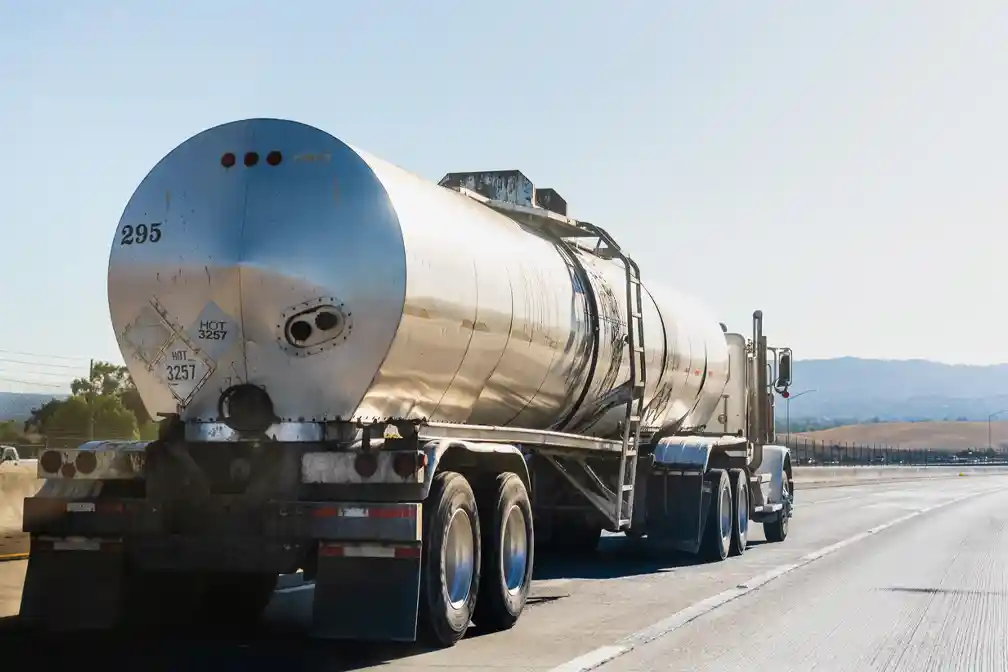
For trucking, one key detail stands out. Treasury said fuel may move through networks of front and shell companies in freight, logistics, and other industries. The agency also said fuel may be smuggled by tanker trucks, railcars, and maritime vessels.
Why Truck Drivers May Need to Pay Attention
Most commercial truck drivers are not directly affected by this Treasury action. Still, the action may matter to certain drivers. That includes drivers who haul fuel, run tanker equipment, carry hazmat freight, or move loads near the U.S.-Mexico border.
Drivers usually do not create customs papers. They also do not decide which customers a carrier accepts. But drivers often carry bills of lading, customs papers, product details, and delivery orders.
If those papers do not match the cargo, route, shipper, receiver, or delivery site, a driver may face questions. That can happen during an inspection or border review.
A driver could be placed in a hard spot, even if the driver had no role in setting up the load.
For tanker and fuel drivers, the concern is simple. Fuel loads moving across the border may draw more attention from federal agencies, customs officers, financial investigators, and law enforcement.
Fuel Smuggling Warning Names Logistics Firms
Treasury’s announcement named several entities tied to transport or logistics. These included Ogui Fletes, OF Transportes, Soma Transporte y Servicios, Jomadi Logistics & Cargo, and Ahavat Logistics Solution.
The agency said one person, Oscar Guillermo Juraidini Silva, ran shell companies and falsified customs papers. Treasury said this helped support illegal cross-border fuel transfers. The agency also said some of his businesses worked in transport, financial services, and real estate.
Treasury also said J. Refugio Ruiz Villagomez played a role in Jomadi Logistics & Cargo and Ahavat Logistics Solution. According to the announcement, he knowingly smuggled fuel from the United States into Mexico without proper permits. Treasury also said he paid fees to cartels and other criminal groups that control ports of entry.
These claims matter for trucking. They show how federal officials are looking beyond drug trafficking. They are also focusing on the business networks that help move fuel.
That includes firms tied to transport, logistics, fuel distribution, and cross-border trade.
Motor Carriers Face Customer and Sanctions Risk
The biggest trucking impact may fall on motor carriers, brokers, and logistics firms. This is most true for businesses that work with fuel shipments or border freight.
Treasury said U.S. persons are generally blocked from doing business with sanctioned people or entities unless allowed by law. The agency also said entities owned 50 percent or more by blocked persons are also blocked. That rule can apply even if the entity is not named on a sanctions list.
That can create risk for trucking businesses. A carrier could unknowingly accept loads, payments, or contracts tied to a blocked person or company.
For motor carriers, this raises the value of basic checks. Companies involved in cross-border fuel freight may need to know key facts before taking a load. They may need to know who owns the freight. They may also need to know who is paying for the move, who will receive the load, and whether any party appears on a sanctions list.
Small carriers and owner-operators may face a different kind of risk. They may not have large compliance teams. But they can still be exposed if they haul for a risky broker, shipper, fuel distributor, or receiver.
This does not mean every border fuel load is suspicious. It does mean carriers in this space may need stronger checks before accepting freight.
Fuel Smuggling Concerns for Compliance Teams
For safety and compliance teams, this case is not only about paperwork. It is also about whether a trucking business can show that it took care to avoid illegal freight activity.
Carriers and brokers tied to fuel or cross-border shipping may need to review several areas. These include customer checks, shipper records, receiver records, payment patterns, customs papers, fuel product descriptions, border routing, and delivery orders.
Dispatch teams may also need clear steps for drivers. A driver may notice a paperwork mismatch or a strange delivery site. A driver may get an unexpected route change or receive unclear product details.
When that happens, the company should have a way to report and review the issue before the load moves farther.
This is very important for tanker, hazmat, and fuel freight. These loads can carry added safety, legal, and environmental risk.
Border Freight Markets May See More Scrutiny
Treasury said FinCEN received more than 160 Suspicious Activity Reports in the 12 months after a prior alert. Those reports described more than $7 billion in suspicious activity.
The agency said the reports were mainly tied to activity between the United States and Mexico. Many reports involved Mexican cartels.
Treasury also said Texas and Florida were the most common U.S. states involved in those reports. In Texas, the subjects were mostly located near the U.S.-Mexico border. The agency named Brownsville, Mission, Eagle Pass, and McAllen as examples. Many of the subjects were tied to the oil and natural gas and transport industries.
That detail may matter for carriers and drivers in border freight markets. It suggests federal officials are watching more than one company or one shipment. They are looking at patterns across fuel, finance, logistics, and transport.
For drivers, this could mean more questions about fuel loads, tanker shipments, paperwork, and cross-border routes. For carriers, it could mean more pressure to document who they are doing business with.
Not a New Trucking Rule, But Still a Warning Sign
This Treasury action should not be confused with a new trucking rule. However, it does serve as a warning sign for a specific part of the trucking industry.
Fuel haulers, tanker fleets, hazmat carriers, cross-border operators, freight brokers, and logistics firms may need to pay closer attention to the business side of fuel freight. That includes paperwork, permits, customers, payment sources, and delivery orders.
The strongest trucking takeaway is that illegal fuel schemes may use parts of the legal freight system. When that happens, drivers and carriers can be pulled into investigations, even if they are not the main target.
What Fuel Smuggling Means for Trucking
The Treasury announcement shows that fuel smuggling is not only a border security issue. It is not only a financial crime issue, either. It is also a transport issue.
Tanker trucks, logistics firms, customs papers, fuel distributors, shell companies, and ports of entry were all part of the conduct described by Treasury. That makes the issue important to trucking businesses involved in fuel movement and cross-border trade.
For commercial truck drivers, the main impact is awareness. Drivers hauling fuel near the southern border may need to watch for paperwork problems, unusual routing, unclear delivery orders, or loads involving unknown companies.
For motor carriers and brokers, the message is broader. The government is watching how freight networks can be used to move illicit fuel. Companies involved in fuel and border freight may need to strengthen customer checks. They may also need to make sure drivers are not placed in risky situations.
This is not a rule change for every truck driver. But for fuel haulers and border carriers, it is a clear sign that cross-border fuel freight is under closer federal scrutiny.


