JimAugust 2, 20234 Mins read504
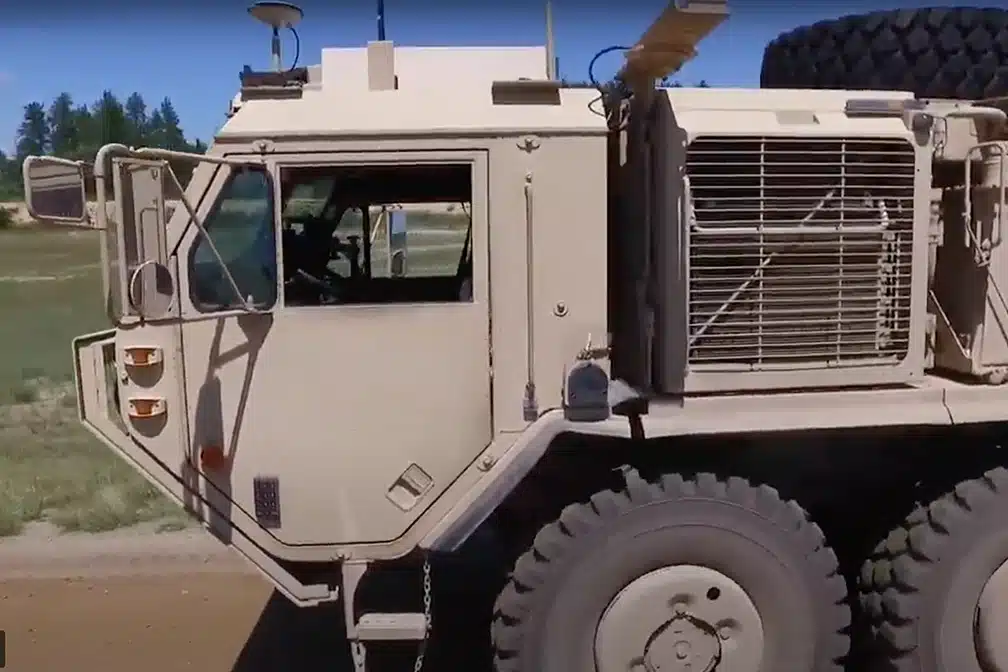
U.S. Army Tests Autonomous Trucks with DTES Technology
A major test took place on the Blue Water Bridge, which connects the U.S. and Canada. The U.S. Army tested a convoy of four trucks, including one with DTES technology. This system allows the truck to steer, accelerate, and brake on its own. The goal is to improve military supply operations and keep soldiers safe by using autonomous trucks.
A Team Effort to Develop Autonomous Trucks for Military Vehicles
The test was made possible through a partnership between TARDEC (Tank Automotive Research, Development, and Engineering Center) and the state of Michigan. Together, they created the DTES initiative. This project brings military engineers and technology experts together to improve military vehicles.
The focus is on building trucks that can handle rough roads and changing conditions. Michigan’s strong transportation industry played a key role in supporting this effort.
Protecting Soldiers with Autonomous Trucks
A key reason for using these trucks is to protect soldiers in dangerous areas. Supply convoys are often targets for attacks. This puts military personnel at great risk.
With DTES-equipped trucks, the Army hopes to change that. Instead of riding in unarmored supply vehicles, soldiers can travel in heavily protected ones. The autonomous trucks will handle transporting supplies.
Paul Rogers, TARDEC’s director, says the mission is clear: save lives, improve efficiency, and make better use of military resources. The goal is to keep soldiers safe while making supply convoys more effective.
How DTES Technology Works
DTES technology includes several advanced features:
- Electronic power steering – Helps control the truck’s direction.
- LIDAR sensors – Works like sonar, measuring distances to avoid obstacles.
- Cameras – Allow the truck to see its surroundings and make safe driving decisions.
These tools help the truck adjust to different road conditions and safely complete missions.
A Successful Test Run
The test was a success. Everything worked as expected. There were no surprises or problems.
Kirk Steudle, head of Michigan’s Department of Transportation, was on board for the test. He was amazed at how well the system worked. The steering made small, precise movements, keeping the truck perfectly aligned with the lead vehicle.
The positive results show that DTES technology could be a game-changer for military logistics.
Future Plans for Autonomous Trucks in the Military
TARDEC has big plans for DTES technology. Over the next two years, the Army will roll out between 150 and 200 more autonomous trucks.
Each convoy will include:
- One manned truck leading
- Seven connected autonomous trucks
This setup improves efficiency and safety in military supply missions.
Paul Rogers believes this technology could become standard, much like seatbelts in passenger vehicles. He sees a future where DTES trucks make military operations safer and more efficient.
The Army Joins the Autonomous Vehicle Revolution
The Army isn’t the only one investing in self-driving technology. Companies like Tesla, Uber, and Google are also working on autonomous vehicles.
TARDEC is leading military efforts in this field. The Army’s work with DTES shows that driverless technology isn’t just for civilian use—it has real military applications.
As more progress is made, a future with fully connected, driverless supply convoys is becoming possible.
A New Era for Military Transportation
Autonomous vehicles were once just an idea in science fiction. Now, they are becoming a reality.
Many companies are investing in this technology to improve transportation. The Army is doing the same but with a focus on soldier safety and mission success.
TARDEC’s work with DTES is helping develop self-driving military trucks that can navigate any environment.
The Blue Water Bridge Test: A Historic Moment
The 2017 test on the Blue Water Bridge was a major milestone. A convoy of four trucks, led by an autonomous vehicle, showed how this technology performs in the real world.
Kirk Steudle, who was part of the test, was excited to see this moment in action. The success of the trial proves that DTES trucks could play a major role in future military operations.
Safer Convoys, Fewer Risks with Autonomous Trucks
The Army’s main goal is clear: keep soldiers out of harm’s way.
Supply convoys are often attacked in war zones. Using autonomous trucks could help reduce this threat. Soldiers can focus on their mission while self-driving trucks safely deliver supplies.
The Technology Behind DTES
DTES technology relies on three main systems:
- Electronic power steering – Helps the truck stay on course.
- LIDAR sensors – Measures distances to detect obstacles.
- Cameras – Provide a real-time view of the road.
These tools allow the truck to adjust its path and drive safely on its own.
Expanding the DTES Fleet
The Army plans to roll out 150 more autonomous trucks in the next two years.
Each convoy will have:
- One human-driven truck
- Seven connected autonomous trucks
This setup will improve efficiency and safety in military logistics.
How DTES Could Change the Future
This technology isn’t just for military use. Paul Rogers believes DTES-equipped trucks could be common in the future.
If widely adopted, autonomous trucks could improve safety and sustainability in transportation.
The Army’s Role in Advancing Self-Driving Technology
The Army’s use of DTES trucks is more than just a test—it’s a step toward the future.
If these vehicles become a regular part of military convoys, they could make operations faster, safer, and more efficient.
Michigan’s TARDEC is leading the way in this transformation. The successful test on the Blue Water Bridge shows that autonomous military trucks are no longer just an idea—they’re a working reality.
Looking Ahead
The Army’s work with DTES technology marks a major breakthrough in military logistics. The successful test on the Blue Water Bridge proves the potential of self-driving trucks to improve safety and efficiency.
As TARDEC expands its fleet, the vision of a driverless future moves closer to reality. DTES technology could revolutionize both military and civilian transportation.
The future of autonomous vehicles is here, bringing safer, smarter, and more efficient solutions to the world.