dayileyvasOctober 14, 20264 Mins read22
Trump Pardons 2 Mechanics After Emissions Convictions
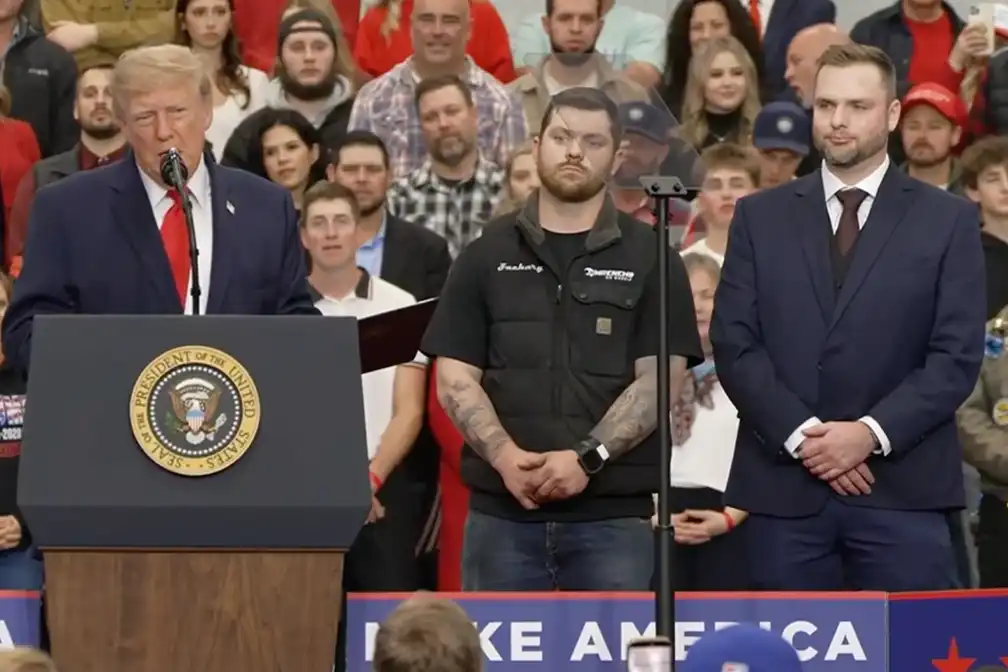
President Donald Trump granted pardons to two Alaska diesel mechanics on October 13, 2026, during a rally in Wasilla, Alaska. The men had previously pleaded guilty to federal Clean Air Act violations involving diesel emissions equipment. The pardons went to Zachary Czubak and Patrick Fleming, two co-owners of Arm Rippin Toys, an Anchorage repair shop specializing in diesel vehicles.
Trump signed the pardon documents onstage after criticizing the federal prosecutions. The event was captured on video and reported by Fox News.
The case involved modifications to emissions-control systems on private and commercial diesel vehicles. Although the pardons address the men’s federal convictions, they do not repeal existing diesel emissions requirements.
Trump Signs Diesel Emissions Pardons During Alaska Rally
During the October 13 event, Trump invited Czubak and Fleming onstage and announced that he was granting each man an unconditional pardon.
The president criticized the earlier prosecution, arguing that the mechanics had been punished for repairing diesel engines.
Trump said he believed the charges were unjust and described the mechanics as people who were trying to help vehicle owners.
Both men briefly addressed the audience after receiving their pardons.
Fleming said the prosecution had affected their families, friendships, and business. He also disputed the characterization of the mechanics as criminals.
“We’re not criminals. We’re not trying to hurt anybody,” Fleming said, according to CBS News.
The mechanics maintained that their work was intended to help diesel vehicle owners, particularly in Alaska, where extremely cold weather can create operating challenges.
Their statements reflected their position on the prosecution. The federal court records separately document the guilty pleas and the conduct involved.
What Led to the Original Diesel Emissions Charges?
The case began years before the October 2026 pardons.
According to the U.S. Department of Justice, Czubak, Fleming, and a third co-owner, Michael Hanzuk II, operated Arm Rippin Toys in Anchorage.
Federal prosecutors said the business performed emissions-related modifications on at least 37 private and commercial diesel vehicles between July 2019 and September 2020.
The work involved removing required pollution-control equipment and modifying onboard diagnostic systems.
These modifications are commonly called diesel deletes or tuning and deleting.
Modern diesel vehicles use emissions-control systems to reduce pollutants released through their exhaust.
Onboard diagnostic systems monitor certain vehicle components and can identify problems involving emissions equipment.
According to the DOJ, the mechanics modified these monitoring systems so vehicles could continue operating without detecting that required emissions equipment had been removed or disabled.
Federal prosecutors reported that the repair shop collected approximately $100,000 for the modifications.
All three co-owners pleaded guilty in 2022 to conspiracy to violate the Clean Air Act.
What Penalties Did the Diesel Mechanics Receive?
The federal case resulted in fines, probation, and community service requirements.
According to DOJ sentencing records:
Zachary Czubak: Five years of probation, a $66,000 fine, and 180 hours of community service.
Patrick Fleming: A $66,000 fine, imposed in February 2023.
Michael Hanzuk II: Five years of probation, a $66,000 fine, and 180 hours of community service. His sentence also included six months of home confinement and a public acknowledgment of wrongdoing.
The penalties followed the defendants’ guilty pleas.
During the Alaska rally, Trump criticized the possibility of lengthy prison sentences in the case. However, the documented sentences did not include prison terms.
The president’s pardons applied to Czubak and Fleming. Hanzuk had already received a presidential pardon in September 2026.
Other Diesel Emissions Pardons Issued in 2026
The October pardons followed other presidential clemency decisions involving diesel emissions cases.
In July 2026, Trump pardoned Mackenzie “Mac” Spurlock, another Alaska diesel mechanic who had faced federal charges involving emissions-control modifications.
Spurlock and his supporters argued that some diesel emissions systems created problems in Alaska’s extreme cold.
Alaska Sen. Dan Sullivan also criticized the prosecution and called for emissions regulations to account for conditions in cold-weather states.
Those arguments concern the practical operation of diesel vehicles in severe weather.
Federal prosecutors, meanwhile, maintained that removing required pollution-control equipment violated the Clean Air Act.
The cases have brought renewed attention to the relationship between diesel equipment maintenance, federal emissions requirements, and enforcement policies.
Federal Approach to Diesel Emissions Enforcement Has Changed
The pardons also come during a broader change in the Justice Department’s approach to certain emissions-related prosecutions.
In January 2026, the DOJ announced that it would no longer pursue criminal charges under the Clean Air Act based on allegations involving tampering with onboard diagnostic devices.
That policy change concerns federal criminal enforcement.
It does not automatically eliminate other federal restrictions or possible civil penalties involving emissions-control equipment.
The Environmental Protection Agency continues to administer Clean Air Act requirements covering vehicle emissions systems and prohibited tampering.
For commercial vehicle owners and repair businesses, the distinction between a change in prosecution policy and a change in federal law remains important.
What the Pardons Mean for Truck Drivers
The Alaska case involved both private and commercial diesel vehicles, making it relevant to the broader trucking industry.
Heavy-duty trucks use emissions-control technology that can include diesel particulate filters, exhaust gas recirculation systems, and selective catalytic reduction equipment.
These systems are designed to control pollutants produced by diesel engines.
Removing or disabling required emissions equipment can create compliance issues under federal law.
A presidential pardon provides clemency for an individual’s federal offenses. It does not authorize other truck owners or mechanics to perform similar modifications.
The pardons also do not automatically change federal vehicle emissions standards.
Truck owners and repair facilities remain responsible for understanding the requirements that apply to their vehicles and equipment.
The October 13 announcement therefore marks a change in the legal circumstances of two Alaska mechanics, rather than a nationwide change in diesel emissions law.
As federal enforcement priorities continue to evolve, the distinction between criminal prosecution policies and existing equipment requirements remains significant for commercial trucking operations.