dayileyvasFebruary 17, 20262 Mins read541
Truck Bottlenecks 2026: ATRI Releases Top 100 Congestion Points
The latest report from the American Transportation Research Institute (ATRI) identifies the 100 most congested freight locations in the United States. The annual study ranks highway interchanges and corridors where truck traffic experiences the greatest slowdowns. This year’s list marks the 15th edition of ATRI’s Truck Bottlenecks analysis. The rankings are based on GPS data collected from commercial trucks nationwide.
Top Truck Bottlenecks in 2026
ATRI’s 2026 report ranks more than 325 freight-critical locations before narrowing the list to the top 100. For the first time, the most congested location is:
I-294 at I-290/I-88 in Chicago, Illinois
This interchange replaces the long-standing top bottleneck near Fort Lee, New Jersey.
Other major Truck Bottlenecks in the Top 10 include:
I-95 at SR 4 – Fort Lee, NJ
I-285 at I-85 (North) – Atlanta, GA
I-45 at I-69/US 59 – Houston, TX
I-75 at I-285 (North) – Atlanta, GA
I-20 at I-285 (West) – Atlanta, GA
I-24/I-40 at I-440 (East) – Nashville, TN
I-10 at I-69/US 59 – Houston, TX
I-71 at I-75 – Cincinnati, OH
I-75 – McDonough, GA
Many of the top bottlenecks are located in major freight hubs in the Midwest and South.
How Truck Bottlenecks Affect Drivers
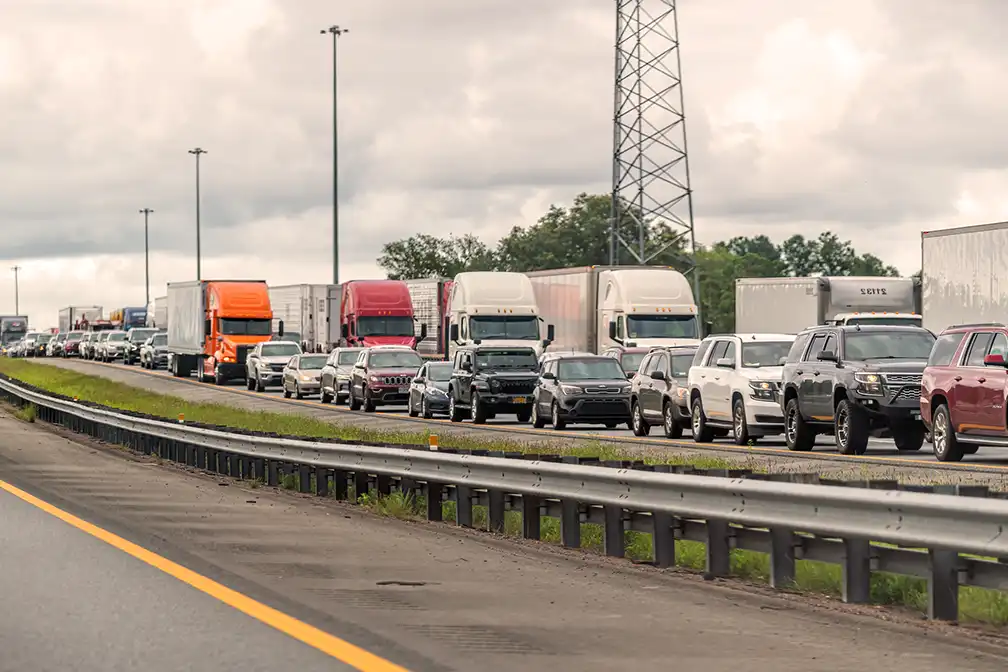
Truck Bottlenecks reduce average speeds and increase travel time. In peak periods, speeds at the top locations can drop sharply compared to free-flow conditions.
For drivers, this often means:
- Longer trip times
- More stop-and-go traffic
- Higher fuel use
- Tighter delivery windows
- Increased stress and fatigue
Even small delays at major bottlenecks can add up over a long haul.
How ATRI Measures Truck Bottlenecks
The rankings are based on real-world GPS data from commercial vehicles. ATRI calculates congestion impact scores by measuring truck speeds during peak and off-peak hours.
The methodology considers:
- Average truck speeds
- Rush-hour slowdowns
- Traffic volume
- Interchange design
This approach focuses specifically on freight movement rather than general passenger traffic.
Regional Trends
Several metro areas continue to dominate the list.
Atlanta and Houston each have multiple locations in the Top 10. Chicago’s rise to the number one position reflects continued pressure on Midwest freight corridors.
Southern freight routes, especially in Texas and Georgia, show consistent congestion tied to high freight volume and population growth.
Why Bottlenecks Matter for Freight Costs
Truck Bottlenecks do more than slow traffic. They increase operating costs.
When trucks idle in congestion, carriers face:
- Higher fuel consumption
- Increased maintenance wear
- Lost productivity
- Reduced driver efficiency
Over time, severe bottlenecks can affect shipping rates and supply chain reliability.
Infrastructure and Policy Impact
ATRI’s data is often used by lawmakers and transportation planners when considering infrastructure funding.
By identifying the most severe choke points, the report provides a roadmap for potential highway improvements, interchange upgrades, and freight-focused investment.
Reducing Truck Bottlenecks can improve traffic flow and reduce costs for carriers.
Bottom Line on Truck Bottlenecks 2026
The 2026 Truck Bottlenecks report shows that congestion remains concentrated at major urban interchanges and freight hubs.
Chicago now holds the top position, while Atlanta and Houston continue to appear multiple times in the Top 10.
For truck drivers, understanding where bottlenecks occur can help with route planning and time management. While congestion is part of the job, awareness of these high-impact locations may help reduce unexpected delays.