Vincent ShakirOctober 20, 20264 Mins read12
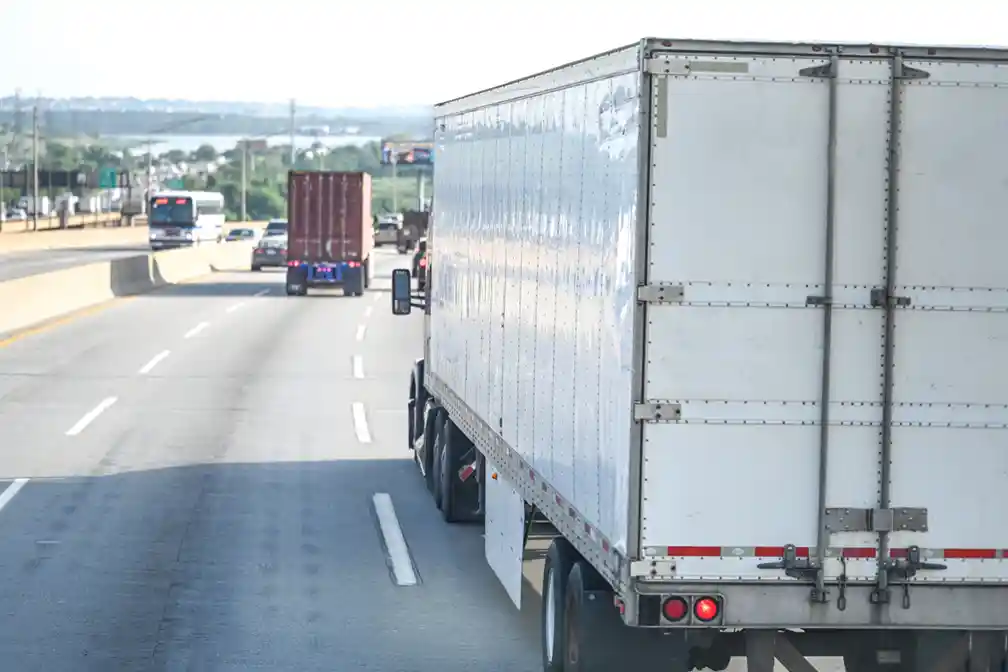
FMCSA Reviews New Truck Rear-End Collision Warning System
The Federal Motor Carrier Safety Administration (FMCSA) is reviewing a new rear-end collision warning system for commercial trucks. The system uses radar and flashing lights to warn motorists who approach trucks too fast. Its goal is to alert drivers when a crash may be close.
Grote Industries, a truck lighting company, wants federal approval to use the new system. The company says the lights could help approaching motorists react to a possible crash. However, safety officials have raised concerns about how the lights would work.
Grote has now shared more details about the system. FMCSA is asking for more public comments before making a final decision.
How the Rear-End Collision Warning System Works
Grote’s Rear-End Collision Warning (RCW) system uses radar at the back of a truck or trailer. The radar can detect vehicles from about 200 meters away. It tracks how fast another vehicle is getting closer.
The system then estimates how much time remains before a possible crash. If the risk reaches a set level, amber warning lights begin to flash. These lights are meant to get the attention of the approaching driver.
Grote’s first request described warning times of about 2.1 to 4.0 seconds before a possible crash. The amber lights can flash for up to four seconds each time the system turns on.
The rear-end collision warning system works on its own. Truck drivers do not need to press a button or turn on the lights. However, the federal notice does not provide proof that the system can prevent crashes.
Why FMCSA Is Reviewing the Warning Lights
Grote first asked for a five-year exemption from federal truck lighting rules in December 2025. Those rules generally require outside lights on commercial vehicles to stay on without flashing. Some types of lights are already allowed to flash.
Grote needs an exemption because its new warning system uses flashing lights. FMCSA first opened the request for public comments in February 2026. The agency later gave the public more time to review it.
The Commercial Vehicle Safety Alliance (CVSA) had asked for more time to study the proposal. During the review, safety officials raised questions about the warning lights.
One concern involved the use of red lights. Grote’s first plan described lights that could flash before changing to a steady red signal.
CVSA said motorists might think those red lights meant the truck was braking. The group raised concerns about using steady red lights when the truck’s brakes were not being applied.
FMCSA then asked Grote to explain how the lights would work.
Grote Explains Changes to the Rear-End Collision Warning
Grote has now made an important point clear. The rear-end collision warning system uses flashing amber lights. Those lights do not change to steady red as part of the crash warning.
Instead, steady red lights are linked to a separate brake-warning function. Both functions can use the same set of extra lights.
If the truck’s brakes are applied while the crash warning is active, the brake-warning function takes over. The lights then follow the brake-warning sequence.
This new information helps address the concerns raised by CVSA. It also explains how the system would show different warning signals.
FMCSA wants the public to review these details before the agency makes its decision.
What the System Could Mean for Truck Drivers
Rear-end collision risks are a concern for commercial truck drivers. Large trucks often travel at different speeds than nearby traffic. This can become an issue when traffic slows quickly or vehicles approach a backup.
Grote’s system is designed to warn motorists who are closing in too fast. For example, a truck may be slowing on a busy interstate. The system could detect a vehicle coming up quickly from behind.
If the system detects a high crash risk, the amber lights begin to flash. The goal is to get the other driver’s attention before a crash occurs.
Truck drivers do not have to do anything to turn on the warning. That means the system could provide an added safety feature without adding another task for the driver.
However, the lights cannot make another motorist slow down. The other driver must still see the warning and react in time.
The federal notice also does not include test results showing how well the system works in daily trucking operations.
Rear-End Collision Warning for Doubles and Triples
Grote wants the exemption to cover all commercial motor vehicles. That includes trucks pulling more than one trailer.
For doubles and triples, the system would be placed on the last trailer. This would put the warning lights at the back of the full truck and trailer combination.
The system could also be used on other types of commercial trucks and trailers. This may interest fleets that operate different kinds of equipment.
However, the notice does not explain how much the system would cost. It also does not list which truck and trailer models could use it.
Those details could matter to owner-operators and trucking companies that may want to add the system later.
No New Rules for Truck Drivers
The proposed exemption would allow motor carriers to use Grote’s rear-end collision warning system if FMCSA approves it. However, it would not require carriers to buy or install the equipment.
The proposal also does not create new CDL rules or training needs. Truck drivers would not have to follow any new steps under this request.
For trucking companies, the system could become another safety option. Fleets would need to consider the cost of the equipment, how it is installed, and how it would be maintained.
They would also need to follow any terms FMCSA sets if the exemption is granted.
At this time, the agency has not approved the request. FMCSA must first decide whether the system would provide at least the same level of safety as the current rules.
What Happens Next at FMCSA?
FMCSA is giving the public another chance to comment on Grote’s updated plans. The notice is scheduled for publication in the Federal Register on October 20, 2026.
The public will have 30 days after publication to send comments. These comments must focus on the new details Grote has provided.
Truck drivers, motor carriers, and other interested parties can submit comments through Regulations.gov. The docket number is FMCSA-2026-0100.
After reviewing the comments, FMCSA will decide whether to approve or deny the five-year exemption.
For truck drivers, the proposal could lead to another tool aimed at reducing rear-end collision risks. The system is designed to warn approaching motorists without any action from the truck driver.
Still, the equipment has not received approval under this request. Its ability to prevent crashes also remains unproven in the federal notice.
The final decision will determine whether motor carriers can use this new warning system under the proposed exemption.