

 dayileyvasMarch 16, 20263 Mins read415
Transportation Secretary Meets with Wisconsin Truckers, Announces $8.4M Rural Infrastructure Investment
Federal officials recently announced new Rural Infrastructure funding aimed at improving freight routes and road connections used by truck drivers in Wisconsin. U.S. Transportation Secretary Sean P. Duffy joined Congressman Derrick Van Orden during a visit to Monroe County, where they highlighted an $8.4 million investment focused on Rural Infrastructure improvements. According to the U.S. Department of Transportation (DOT), the funding is intended to support road upgrades that may help freight movement and strengthen transportation networks in rural communities.
The visit also included meetings with truck drivers and local transportation officials to discuss industry concerns and infrastructure needs across the region.
Officials Meet With Truck Drivers to Discuss Rural Infrastructure
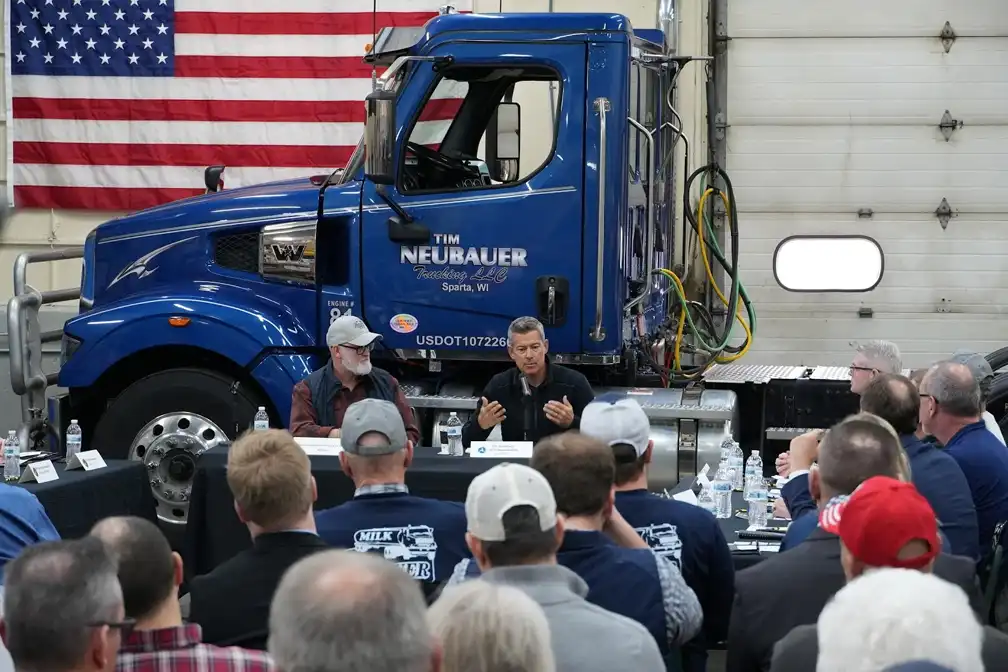
Secretary Duffy and Rep. Van Orden met with truck drivers and transportation leaders at the Monroe County Highway Shop in Wisconsin. The discussion focused on issues affecting the trucking industry, including road conditions, safety, and regulatory oversight.
Federal officials said the meeting provided an opportunity to hear directly from drivers who rely on rural highways for freight transportation. Many rural roads serve as key links between farms, manufacturing sites, and larger interstate freight corridors.
During the visit, officials emphasized that Rural Infrastructure plays a critical role in keeping freight moving across the country. They noted that improvements to rural roadways may help reduce delays and support safer travel for commercial vehicles.
The roundtable discussion was part of a broader effort by the DOT to gather feedback from trucking professionals as the agency reviews transportation policies and infrastructure priorities.
$8.4 Million Rural Infrastructure Investment in Monroe County
The visit also highlighted an $8.4 million federal investment aimed at strengthening Rural Infrastructure in Monroe County, Wisconsin.
According to the DOT, the funding will support projects designed to improve roads, bridges, and transportation connections used by commercial trucks and other vehicles. Officials said the improvements may help increase efficiency along freight routes that connect rural areas with larger distribution networks.
Rural transportation systems often support industries such as agriculture, manufacturing, and logistics. These industries rely heavily on trucking to move goods to regional markets and national supply chains.
Federal officials said investments in Rural Infrastructure may help improve connectivity between rural communities and major highways. Improved connections could also help support economic activity in areas where trucking is a primary method of moving freight.
Rural Infrastructure and Freight Transportation
Transportation officials noted that rural roads are an important part of the national freight system. While interstates carry a large share of long-haul trucking traffic, many shipments begin or end on smaller rural roads.
Because of this, officials said maintaining strong Rural Infrastructure networks remains important for freight movement. Upgrading roads and bridges in rural areas may help improve reliability for trucking companies that operate in these regions.
Officials also pointed out that truck drivers often rely on rural routes to reach farms, distribution centers, and manufacturing plants. As a result, infrastructure improvements may support both local economies and national freight supply chains.
Federal Focus on Transportation and Industry Feedback
During the Wisconsin visit, Secretary Duffy also discussed broader issues affecting the trucking industry. According to the DOT, trucking remains one of the most important parts of the U.S. freight system.
Federal officials indicated that they are continuing to review policies related to safety oversight, regulatory compliance, and driver training programs. They also suggested that stronger oversight of commercial driver training schools may help maintain safety standards across the industry.
At the same time, officials emphasized the importance of hearing directly from drivers and industry representatives when shaping transportation policy.
Continued Attention on Rural Infrastructure
The Wisconsin announcement reflects ongoing federal efforts to invest in transportation systems that support freight movement across the country. Officials said improving Rural Infrastructure remains a key part of maintaining strong transportation networks and supporting economic activity in rural communities.
According to the DOT, investments in roads, bridges, and freight corridors may help improve transportation reliability and strengthen supply chain connections between rural regions and larger markets.
As infrastructure discussions continue at the federal level, meetings with truck drivers and local leaders may help inform future decisions on Rural Infrastructure, freight transportation, and national supply chain development.


