Vincent ShakirApril 29, 20252 Mins read1.5k
Trump Signs Executive Order Enforcing English Proficiency Rules for Truck Drivers
Confirming the “Commonsense Rules of the Road” Initiative
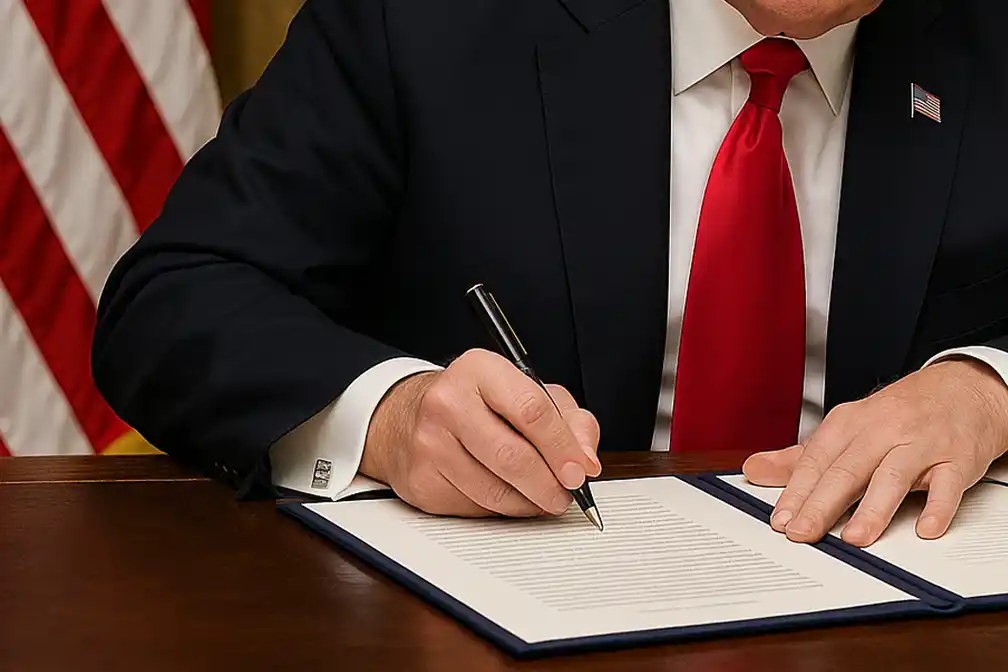
Yesterday, President Trump signed the executive order “Enforcing Commonsense Rules of the Road for America’s Truck Drivers” in the oval office. The order restores federal enforcement of English proficiency requirements for commercial truck drivers. These rules have been in place for years but saw reduced oversight starting in 2016.
Now that the final documents have been released, several new enforcement details have been confirmed. These new steps expand on what was originally expected.
Expanded Measures to Enforce English Proficiency Standards
The order outlines several key steps that go beyond earlier expectations. While it was initially believed that enforcement would focus on driver communication skills—reading road signs, talking to law enforcement, etc.—the final documents confirm a broader enforcement plan.
Confirmed actions include:
- Auditing state CDL licensing agencies to verify that English proficiency is tested before a license is issued.
- Directing interagency coordination among the Departments of Transportation, Homeland Security, and Labor.
- Reviewing visa programs to ensure that foreign drivers meet the same English proficiency and safety standards required of domestic drivers.
These additional actions highlight a more aggressive push to enforce the existing rule.
DOT Will Lead English Proficiency Inspections and Oversight
The U.S. DOT is tasked with leading the enforcement process. Prior to the executive order’s release, the DOT’s role was assumed to be limited. However, Secretary of Transportation Sean P. Duffy confirmed that the agency will take immediate action to uphold the new guidelines.
According to Secretary Duffy, roadside inspections will now include a review of driver English proficiency. The DOT will also begin audits of state CDL processes to confirm compliance with federal standards.
“Truck drivers who want to share our roads must be able to share our language,” Duffy said. He stressed that the goal is to improve safety for all drivers.
Renewed Oversight of Visa Programs for Foreign Drivers
One of the most notable developments in the order is the renewed focus on visa program oversight. While early reports centered on domestic licensing and roadside enforcement, the final documents confirm that the Department of Labor will also monitor foreign worker visa programs used to hire truck drivers.
The goal is to ensure that all drivers—regardless of nationality—meet the same English proficiency requirements. This expansion ties language skills not only to safety but also to labor policy and immigration enforcement.
Truck Drivers and States Will Face Accountability
The order signals a shift toward greater accountability for both individual drivers and state agencies. While English proficiency has long been required under Federal Motor Carrier Safety Administration (FMCSA) regulations, enforcement has been inconsistent.
Now, drivers who cannot meet these standards could face consequences such as license suspension or revocation. State licensing agencies will also be subject to audits to ensure they are testing for English proficiency in accordance with federal rules.
Restoring Standards That Were Loosened in 2016
According to the White House, the order restores enforcement that had been reduced or deprioritized since 2016. While the requirement remained in place, regulatory oversight was weakened. The current administration’s action brings English proficiency back into the spotlight as a critical factor in road safety.
By reinforcing these standards and expanding enforcement, the administration aims to prevent mishaps on the road.
A More Comprehensive Plan Than First Described
Before the signing, the order was expected to focus mainly on English proficiency. The final plan, however, reveals a more comprehensive strategy. It includes interagency enforcement, CDL licensing audits, visa program oversight, and strict English proficiency standards for all commercial truck drivers.