Vincent ShakirSeptember 29, 20264 Mins read3.3k

FMCSA Rejects Push to Give Truck Drivers a Paper Log Option
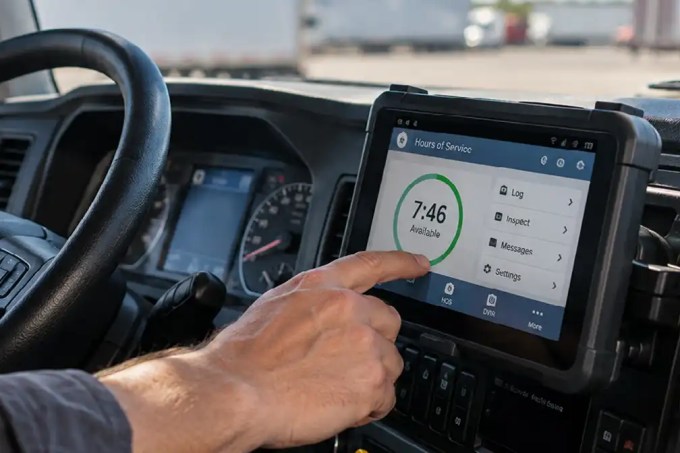
The Federal Motor Carrier Safety Administration (FMCSA) has denied a request that would have allowed more commercial truck drivers to use a paper log instead of an ELD.
The request came from the Federation of Professional Truckers, or FOPT. The group asked FMCSA to let professional drivers choose manual records of duty status instead of using an electronic logging device. FMCSA said the proposal did not meet federal safety standards and also conflicted with the broader ELD mandate created by Congress.
For truck drivers, the decision does not create a new rule or change current hours-of-service limits. Drivers who are already required to use an ELD must continue doing so, while existing exceptions remain in place.
FMCSA Denies Broad ELD Exemption Request
FOPT sought an exemption from federal ELD requirements for drivers who wanted to record their duty status manually with a paper log.
Under current rules, drivers who must prepare records of duty status generally must use an ELD. However, federal regulations allow a carrier to use manual records when a driver needs a record of duty status on no more than eight days during any 30-day period.
FMCSA reviewed the exemption request along with comments submitted by the public. The agency ultimately decided that the proposed paper log system would not provide a level of safety equal to or greater than the existing ELD requirement.
That means the current logging requirements remain unchanged for drivers and motor carriers.
Federal Law Limits FMCSA’s ELD Authority
One of the most important parts of the decision involves FMCSA’s legal authority over ELD requirements.
The agency pointed to a provision of the Moving Ahead for Progress in the 21st Century Act, commonly known as MAP-21. That law directed the federal government to require ELDs in commercial vehicles operated in interstate commerce by drivers who must keep records of duty status.
FMCSA said it is bound by that congressional requirement.
As a result, the agency said it cannot provide a blanket exemption for any driver or carrier that simply wants to replace an ELD with a paper log.
That finding is important because it suggests that a broad change to the federal ELD requirement may not be something FMCSA can accomplish through the exemption process alone.
Hundreds of Comments Supported the Paper Log Request
The exemption request drew significant public interest.
FMCSA received 901 comments, including 890 unique comments. The agency said most individual commenters supported granting the exemption.
Supporters raised several concerns that are familiar to commercial truck drivers.
Some argued that using a paper log could reduce driver stress and give drivers more control over when they operate. Others said ELDs add costs for trucking companies or can create problems when devices malfunction. Adequate truck parking was also raised by many supporters.
Several comments focused on the pressure drivers may feel while working against an electronic clock.
One commenter argued that drivers should have more control to tell a carrier or dispatcher when they need to stop and rest. Another said an ELD can create pressure to keep moving while available time is counting down.
Other comments raised concerns about technical problems with ELDs. Commenters said incorrect information about available driving hours could affect load planning, pickup times, deliveries, and driver finances.
Truck Parking Becomes Part of the ELD Debate
Truck parking also became a notable part of the comments submitted to FMCSA.
One longtime driver argued that the main problem may not be whether drivers use an ELD or a paper log. Instead, the commenter pointed to hours-of-service rules and the pressure drivers can face when searching for parking before their available time expires.
The comment described drivers trying to reach a parking space before their time runs out. It also raised concerns about drivers ending up on ramps or along the roadside.
FMCSA did not adopt that argument as an agency finding. However, the comments show how some drivers connect ELD use with broader issues involving parking, scheduling, rest, and hours-of-service limits.
Safety Groups and ATA Oppose Paper Log Exemption
Not every commenter supported a return to paper logs.
The American Trucking Associations argued that ELD use does not change the hours-of-service rules themselves. ATA said drivers and fleets remain responsible for planning routes and unexpected delays within the same HOS limits, whether a paper log or ELD is used.
Several highway safety organizations also opposed the exemption.
The Institute for Safer Trucking and Road Safe America argued that ELDs improve compliance and accountability. They also said returning to paper logs could weaken safety gains.
Another opposing comment cited FMCSA data showing that inspections with at least one hours-of-service violation declined from 274,441 in 2018 to 191,797 in 2020. The cited report found that the decline after adoption of the ELD requirement was statistically significant.
FMCSA Questions Proposed Safety Controls
FMCSA also found problems with how FOPT planned to manage the exemption.
FOPT said it would educate members about accurate paper log use. Participating carriers would conduct random audits, and drivers who violated hours-of-service limits could be removed from the exemption program.
However, the requested exemption was not limited only to FOPT members.
FMCSA said FOPT did not explain how those safety controls would apply to an unknown number of drivers outside the organization. The group also did not explain how violations would be handled across that larger group.
The agency said those shortcomings, along with the federal ELD mandate, supported denying the request.
What the ELD Decision Means for Truck Drivers
For drivers currently using ELDs, the immediate answer is simple: nothing changes.
Drivers who are required to use an ELD must continue using one. Current hours-of-service limits remain in place, and the decision does not create a new compliance deadline or logging requirement.
Existing exceptions also remain unchanged. The decision does not remove situations where federal rules already allow a driver to use a paper log.
The larger significance is what FMCSA said about its own authority.
The agency did not only reject FOPT’s safety case. It also said Congress has required ELD use for affected interstate drivers and that FMCSA cannot create the kind of broad voluntary paper log option FOPT requested.
That leaves the wider debate over ELD use, hours-of-service flexibility, truck parking, driver pressure, and paper logs unresolved.
The Federal Register notice was filed September 29 and is scheduled for publication September 30, 2026.