Vincent ShakirNovember 10, 20264 Mins read36

Container Fee Dispute: Big Money, Lost Time
An ongoing dispute over container fees involving Hapag-Lloyd raises questions about port delays, trucking costs, and the challenges facing drayage drivers.
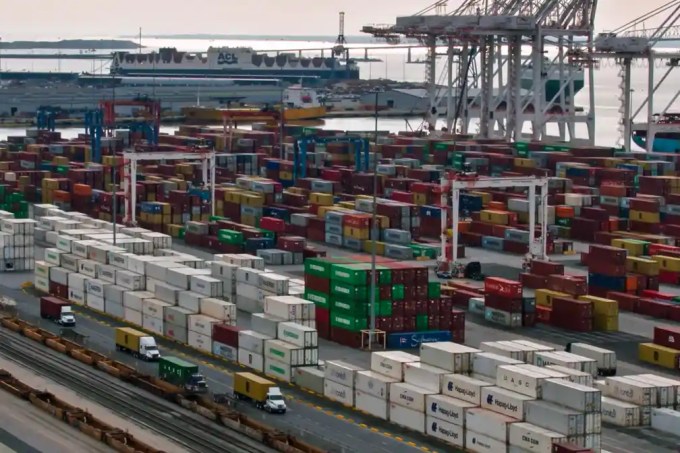
A truck driver arrives at a port to pick up a shipping container. The fees have been paid, and the driver is ready to move the load. However, terminal workers will not release the container because other containers are blocking it.
That is one of the problems described in an ongoing legal case involving ocean shipping company Hapag-Lloyd AG. The dispute involves more than $1.16 million in container fees that a Michigan importer claims were unfairly charged during major shipping delays.
The case is now moving forward with a new filing at the Federal Maritime Commission (FMC). It also raises questions about what happens when truck drivers cannot move containers because of conditions outside their control.
Dispute Over Container Fees Moves Forward
Orleans International, a meat importer based in Michigan, has filed a second amended complaint against Hapag-Lloyd. The FMC announced the filing in a Federal Register notice scheduled for November 12, 2026.
The complaint concerns detention and demurrage fees charged during 2021 and 2022. Orleans claims it paid about $1.162 million in charges that it considers unfair.
According to the complaint, port congestion, equipment shortages, and other problems made it difficult to pick up or return containers on time. Orleans also alleges that Hapag-Lloyd failed to properly address attempts to resolve the disputed fees.
The company claims these actions violated federal shipping laws and FMC rules. However, the allegations have not been proven, and the Commission has not issued a final ruling in the case.
The new filing updates an existing legal dispute. It does not announce new trucking rules or restrictions.
Truck Driver Reportedly Blocked From Container Pickup
One of the clearest examples in the case involves a truck driver at the Packer Avenue Marine Terminal in Philadelphia.
According to Orleans’ earlier amended complaint, the driver arrived on February 15, 2022, to pick up a container. The required fees had already been paid.
However, the complaint alleges that terminal staff would not release the container until three other containers were removed.
An email cited in the complaint shows that a terminal representative asked workers to serve the driver. The message noted that the fees were paid and the container was only three positions deep in the stack.
Orleans claims the delay was part of a larger pattern of problems at the terminal.
The company says that same container had built up $20,480 in demurrage charges over 40 days. Another container reportedly faced $32,768 in charges over 64 days.
These figures are allegations made by Orleans. The FMC has not determined whether the charges were improper.
Still, the incident shows how port access problems can prevent truck drivers from completing scheduled pickups.
How Container Delays Can Affect Truck Drivers
Drayage drivers move shipping containers between ports, warehouses, rail yards, and other freight sites. Their work depends on being able to pick up and return containers when needed.
When a terminal cannot release a container, a driver may lose time that could have been used to complete another load.
For owner-operators paid by the load, fewer completed trips can mean less revenue. Delays can also add fuel costs and make it harder to plan the next move.
Company drivers may face long waits or changes to their work schedules. Dispatchers must also adjust pickup times, equipment assignments, and delivery plans.
The complaint describes another problem involving the return of empty containers.
In July 2021, a warehouse operator reported that drayage companies were making special trips to return empty containers. These trips were linked to scheduling problems and chassis shortages.
A chassis is the trailer frame used to haul a shipping container. Without one, a driver cannot move the container by truck.
Extra trips can increase operating costs and reduce the time available for other freight moves.
The complaint does not establish how much individual drivers lost in pay. It also does not show that truck drivers were personally responsible for the disputed container fees.
Why Container Fees Matter to Trucking
The dispute involves two types of charges commonly used in ocean shipping.
Demurrage generally applies when a shipping container remains at a port or terminal beyond the allowed free time.
Detention generally applies when a container is kept outside the terminal longer than the allowed period.
These container fees are different from the detention pay a truck driver might receive for waiting at a shipper or receiver.
Ocean carriers use these fees to encourage the timely movement and return of containers. However, disputes can arise when cargo cannot be moved because of port closures, equipment shortages, or a lack of available appointments.
Under FMC rules, detention and demurrage practices must serve a reasonable purpose in encouraging freight movement.
The Commission considers whether cargo was available for pickup and whether an empty container could be returned.
In July 2026, the FMC announced that a federal appeals court had upheld an earlier decision involving detention charges assessed when a trucker could not return equipment during a port closure.
That decision involved a different shipping company and a separate case. It does not determine the outcome of the Hapag-Lloyd dispute.
What Disputed Container Fees Mean for Drayage Carriers
The Orleans complaint highlights the importance of keeping records when container moves cannot be completed.
For drayage companies, records of appointment attempts, terminal delays, container availability, and rejected returns may help explain why a shipment was late.
Emails, gate records, and other documents can also provide evidence when container fees are disputed.
However, the outcome of each dispute depends on its facts and the rules that apply.
The case also shows how a delay at a port can affect several businesses at once. An importer may face added shipping fees, while a trucking company may face extra trips, lost time, or scheduling problems.
Although the current complaint concerns older shipments, the issues involved remain relevant to the business of moving containers.
What Happens Next in the Hapag-Lloyd Case?
The FMC has assigned the dispute to its Office of Administrative Law Judges.
According to the November filing, the current schedule calls for an initial decision by March 19, 2027. A final Commission decision is scheduled for October 4, 2027.
Those dates could change as the legal process continues.
Hapag-Lloyd has contested aspects of the case, including the proposed changes to the complaint. The latest notice does not establish that the company violated federal law.
For now, the dispute remains unresolved.
For commercial truck drivers, the larger issue is clear. A container cannot always be moved simply because a truck and driver are available. Terminal access, equipment shortages, and other port problems can prevent a pickup or return.
The ongoing case raises an important question about who should bear the costs when those delays occur beyond the control of the businesses trying to move the freight.