dayileyvasSeptember 3, 20264 Mins read569
Alabama Expands Trucking Enforcement With Federal Support
Alabama Gov. Kay Ivey is backing a new federal effort targeting fraud and unlawful activity in commercial trucking. Her office also released updated figures from the state’s enforcement operations.
The September 2 announcement connects Alabama’s existing enforcement work with a larger federal initiative involving the U.S. Department of Transportation, Department of Homeland Security, and Department of Justice.
State officials said Alabama has assisted federal immigration authorities with 561 detentions since October 2025. State troopers have also issued more than 1,000 English-language proficiency violations since the beginning of 2025.
A new state law governing foreign commercial licenses and English proficiency is scheduled to take effect October 1, 2026.
Alabama Backs New Federal Trucking Initiative
The federal government announced its expanded trucking enforcement effort on August 31. The initiative covers CDL training providers, third-party skills testers, carriers, employers, and possible criminal activity.
According to the Federal Motor Carrier Safety Administration, the effort includes several major actions:
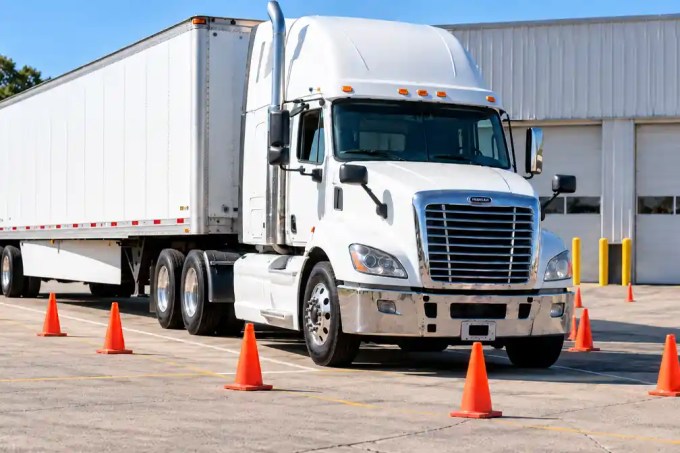
- Emergency removal of more than 110 entry-level driver training providers
- Proposed removal of more than 160 additional training providers
- A nationwide audit of third-party CDL skills testers
- Inspections involving more than 200 driving schools across 23 states
- Creation of the Joint Task Force Crossroads of America
FMCSA said the 110 providers removed on an emergency basis were associated with more than 5,000 drivers later cited for English-language proficiency violations. Those providers were ordered to stop providing training immediately.
The separate group of more than 160 schools received proposed-removal notices following federal investigations. Those investigations identified issues such as unlicensed instructors, inadequate training areas, and missing assessment records.
The Joint Task Force Crossroads of America will initially bring together federal prosecutors and law enforcement agencies in Illinois, Indiana, Michigan, and Ohio. Its stated purpose is to investigate CDL fraud, unlawful trucking operations, and related criminal activity.
Alabama Trucking Enforcement Began in 2025
Alabama’s current enforcement partnership began on October 27, 2025. U.S. Immigration and Customs Enforcement personnel started joining commercial vehicle enforcement assignments conducted by the Alabama Law Enforcement Agency when available.
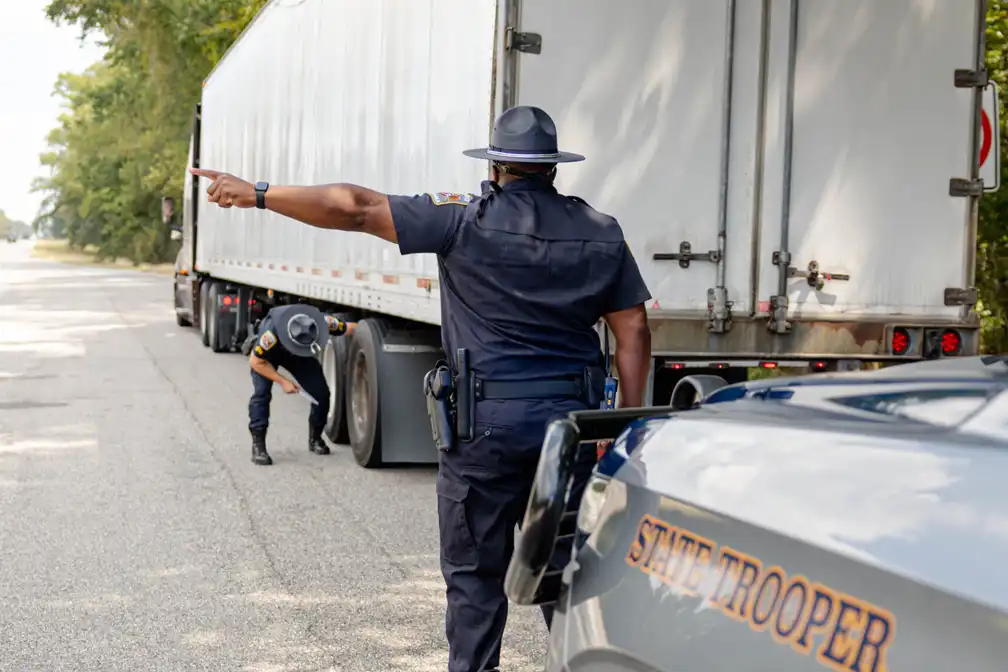
The operations involve ALEA’s Motor Carrier Safety Unit. This division conducts commercial vehicle inspections and enforcement along state highways.
In December 2025, the governor’s office reported that ALEA had referred approximately 242 people to ICE for immigration-status checks. ICE detained 82 of those individuals, according to the state’s earlier announcement.
The latest release raises the total substantially. The governor’s office now says ALEA has assisted ICE with the detention of 561 people encountered during commercial vehicle enforcement activities since the partnership began.
The release does not provide a complete breakdown of those cases. It does not identify how many people were operating trucks when detained, which immigration violations were involved, or how many cases resulted in removal proceedings.
Detention for an alleged immigration violation also does not, by itself, establish a criminal conviction.
More Than 1,000 Language Violations Issued
Alabama officials said Motor Carrier Safety Unit troopers have issued 1,022 English-language proficiency violations to commercial drivers since January 1, 2025.
Federal regulations require commercial vehicle drivers to have enough English proficiency to communicate with officials, understand highway signs, respond to questions, and complete required reports and records.
Federal officials resumed placing drivers out of service for English-language proficiency violations in June 2025. The recent national announcement said more than 28,000 drivers have been placed out of service under that policy.
An out-of-service order prevents a driver from continuing to operate a commercial vehicle until the condition that caused the order has been addressed. It is different from a CDL suspension, license cancellation, arrest, or criminal conviction.
New Alabama CDL Law Starts October 1
The state’s enforcement approach will also include requirements established by the Highway Safety and Fairness Act. Ivey signed the legislation in March, and it takes effect October 1.
According to the governor’s announcement about the law, it includes three central provisions:
- Foreign CDL holders operating in Alabama must have valid U.S. work authorization.
- CDL holders must demonstrate English-language proficiency.
- Presenting a fraudulent foreign CDL during an enforcement encounter becomes a criminal offense.
The law may affect drivers operating in Alabama with commercial licenses issued by another country. Its practical effect will depend on how officers verify licenses, work authorization, and English proficiency during roadside encounters.
The governor’s office also said Alabama does not issue non-domiciled CDLs. According to the state, it limits CDL issuance to lawful permanent residents.
Alabama Reports Fewer Commercial Vehicle Fatalities
Alabama recorded 106 fatalities in crashes involving commercial motor vehicles during 2025, according to the governor’s office. The state described that as its lowest annual total since 2021.
Through the available portion of 2026, the state was experiencing a 24% reduction in commercial vehicle-related fatalities compared with the same period in 2025.
ALEA said it places enforcement resources in high-crash corridors and areas where commercial vehicle violations are common. The agency reported reductions in crashes in some corridors where enforcement was concentrated.
However, the governor’s release does not provide corridor-level figures or an analysis proving that the enforcement operations caused the statewide decline. Crash deaths can be influenced by traffic volume, weather, road conditions, enforcement, vehicle safety, and other factors.
What the Enforcement Means for Truck Drivers
Commercial drivers traveling through Alabama may encounter continued attention to licensing, English proficiency, vehicle condition, and immigration-related work authorization.
The October law adds state-level requirements to an enforcement environment that already includes federal commercial vehicle rules. Drivers operating with foreign licenses may face additional document checks after the law takes effect.
The current update does not announce a new statewide inspection blitz or identify particular weigh stations, highways, or enforcement dates. Instead, it confirms that Alabama plans to continue its existing partnership with federal immigration authorities while supporting the broader federal effort.
For carriers, training providers, and CDL holders, the announcement signals increased coordination between state and federal agencies. The practical results will become clearer as Alabama implements its new law and releases additional enforcement data.