dayileyvasNovember 16, 20264 Mins read55
Trucker Bathroom Access: New Bill Heads to Committee
A new bipartisan bill aims to improve trucker bathroom access at businesses across the United States. The legislation would require certain businesses to allow commercial truck drivers to use existing restrooms while picking up or delivering freight. On November 12, 2026, U.S. Senators Lisa Blunt Rochester (D-Del.) and Deb Fischer (R-Neb.) announced the introduction of the Trucker Bathroom Access Act. The legislation, identified as S. 5718, is scheduled for consideration by the Senate Committee on Commerce, Science, and Transportation on November 18.
The proposal addresses a long-standing concern among professional truck drivers who often spend hours waiting at shipping and receiving facilities without access to basic amenities.
What the Trucker Bathroom Access Act Would Require
The Trucker Bathroom Access Act would establish federal restroom access requirements for certain commercial motor vehicle operators. Under the proposed legislation, businesses would have to provide eligible truck drivers with access to qualifying restrooms when delivering cargo or waiting for their vehicles to be loaded.
The requirements would apply to several types of businesses, including:
- Shippers and receivers.
- Manufacturing facilities.
- Warehouses and distribution centers.
- Retail businesses open to the public.
- Other businesses that ship or receive goods by commercial motor vehicle.
The proposal covers existing restrooms available to employees or customers. Access would be subject to certain health, safety, and security conditions. Most businesses would not have to build new restrooms or make physical changes to existing facilities to comply with the legislation.
Exceptions to Trucker Bathroom Access Requirements
The bill includes several exceptions to address the needs of businesses and protect workplace safety. For example, a restroom would not qualify if allowing a truck driver to enter the area would create a clear health or safety hazard. Businesses could also restrict access when it would present an obvious security risk.
The legislation also excludes certain small buildings measuring 800 square feet or less when their restrooms are intended only for employees. These may include small gas stations, service stations, and restaurants.
These provisions would allow businesses to maintain necessary safety and security measures while expanding bathroom access for commercial drivers at qualifying locations.
Additional Requirements for Drayage Truck Drivers
The proposed legislation also includes separate provisions for drayage truck drivers. These drivers transport cargo through ports and intermodal facilities, often moving shipping containers between terminals, warehouses, and rail yards.
Under the bill, marine terminal operators would have to provide enough restrooms in areas normally accessible to qualifying drayage drivers. Unlike the general requirements for other businesses, the provisions for marine terminals could require additional facilities when necessary.
Terminal operators would also have to provide:
- Access to existing restrooms when safety conditions allow.
- Additional restroom facilities in areas with the greatest need.
- Parking spaces where drivers can leave their vehicles while using restrooms.
Portable toilets could also meet the requirements if they are located in safe areas.
The provisions define qualifying drayage vehicles as those with a gross vehicle weight rating greater than 33,000 pounds operating at port or intermodal rail yard properties for cargo-related activities.
Trucker Bathroom Access Remains an Industry Concern
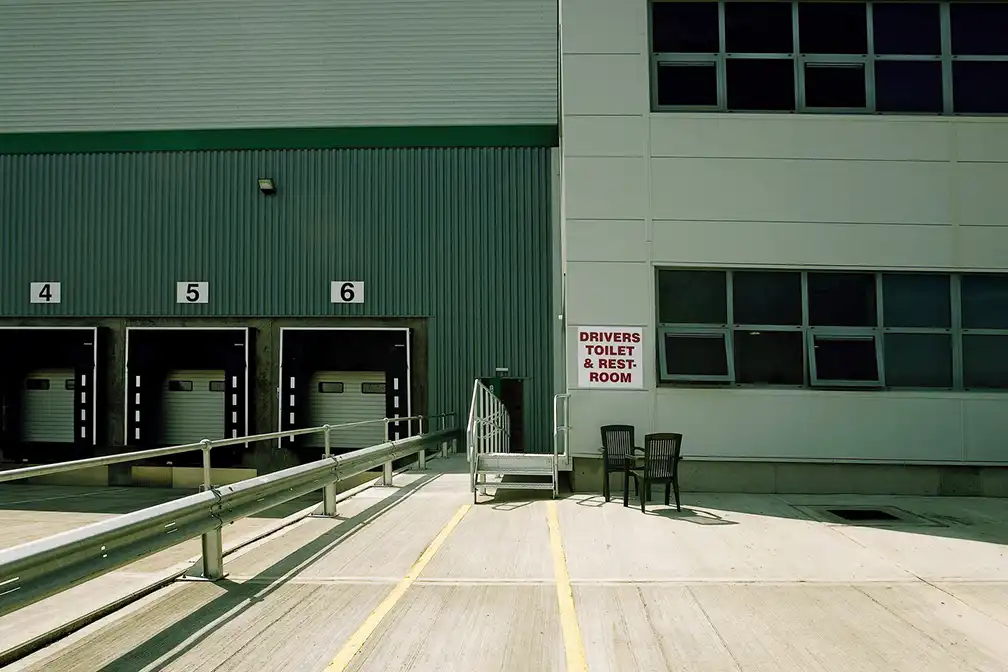
Professional truck drivers often face extended waiting times at loading docks and freight facilities. Depending on the operation, loading or unloading a trailer can take several hours.
During these delays, drivers may have limited opportunities to leave the property. Moving a commercial vehicle to another location is not always practical, especially when a driver is waiting for a loading appointment or instructions from facility personnel.
Limited bathroom access can affect drivers’ health, comfort, and working conditions. It can also create additional challenges for drivers managing tight delivery schedules and federal hours-of-service requirements.
The issue has received particular attention as the trucking industry works to recruit and retain more women. However, the proposed legislation would apply to qualifying drivers regardless of gender.
Trucking Industry Groups Support the Legislation
Several trucking organizations have expressed support for the Trucker Bathroom Access Act. Supporters include the Owner-Operator Independent Drivers Association (OOIDA), American Trucking Associations (ATA), Women In Trucking Association, SHE Trucking, and Trinity Logistics.
These organizations have identified restroom availability as an important workplace issue for professional drivers. ATA has also pointed to research from the American Transportation Research Institute (ATRI) identifying restroom access as a significant concern, particularly among female truck drivers.
Industry representatives believe improved access could help address some of the challenges associated with recruiting and retaining drivers.
Senate Committee to Consider Trucker Bathroom Access Act
The Senate Committee on Commerce, Science, and Transportation has included the Trucker Bathroom Access Act on its agenda for Wednesday, November 18, 2026 at 10 a.m. Eastern Time. During the meeting, lawmakers will have an opportunity to consider the legislation and possible amendments before deciding whether to advance it.
A companion measure in the House of Representatives is led by Congressman Troy Nehls (R-Texas) and Congresswoman Chrissy Houlahan (D-Pa.). According to ATA, the House Transportation and Infrastructure Committee approved the House measure in May as part of the Build America 250 Act.
What the Proposed Legislation Means for Truck Drivers
If enacted, the Trucker Bathroom Access Act would establish federal protections for restroom access during certain freight pickups and deliveries. For company drivers and owner-operators, the legislation could reduce difficulties associated with finding restroom facilities while waiting at customer locations.
The separate provisions for marine terminals could also improve access for drayage drivers working at some of the nation’s busiest freight gateways. However, the bill has not become law. Businesses are not yet subject to the proposed federal requirements. The November 18 committee meeting represents the next step in the legislative process. The bill would still need to complete the remaining steps in Congress and receive presidential approval before becoming law.