Vincent ShakirSeptember 16, 20264 Mins read187
FMCSA Warns Carriers About Fake Motus Websites
The Federal Motor Carrier Safety Administration (FMCSA) is warning motor carriers about a scam tied to its Motus registration system. Scammers are sending fake emails that claim a carrier must complete a required account update. Those emails then send users to fake websites that look like the real Motus portal.
The warning is especially important for owner-operators and small trucking companies. In many cases, the driver is also the person who handles federal registration and compliance work.
Fake Motus Emails Claim Carriers Must Update Accounts
The scam starts with an email that tells a carrier to complete an “off-cycle update.” The message says the update is required and is separate from the normal biennial update. It may also include what looks like a carrier access code.
This wording is meant to make the message look like a real FMCSA notice. A carrier that wants to stay compliant may feel pressure to act quickly. FMCSA says the message is fake.
The agency has listed several fake websites tied to the scam:
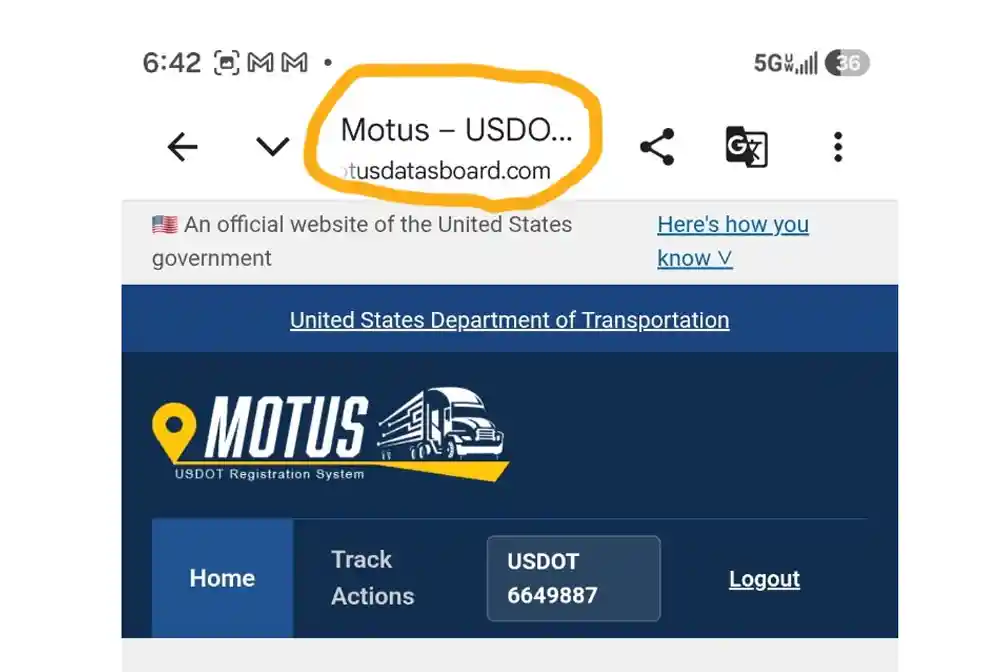
- dot.motusdatasboard.com
- dot.motusdatadesk.com
- dot.motuswebdeck.com
- dot.motusfunction.com
The real Motus website is motus.dot.gov. FMCSA also notes that the official name is written as “Motus,” not “MOTUS” in all capital letters.
Fake Motus Website Looks Like a Government Portal
The fake website is designed to look official. An FMCSA screenshot shows a page with Motus-style branding and tools that look like real carrier services. The page includes options such as “Track Actions,” “Off-Cycle Update,” and “Submit Biennial Update.”
It also claims that it is an official U.S. government website. However, the web address uses a .com domain instead of a .gov domain. That is a major warning sign.
The design could still fool someone who is not familiar with the real Motus system. This may be especially true for carriers that are still learning how the new system works.
Owner-Operators May Face the Most Risk
Owner-operators may be among the most likely people to see this type of scam. Many handle their own USDOT registration, operating authority, business records, and other federal paperwork. A fake Motus message may go straight to the person who owns and drives the truck.
Small carriers may face the same problem. They may not have a large compliance team that can review each notice before someone takes action. A professional-looking message about a federal update can appear real at first glance.
Company drivers may face less direct risk if they do not handle carrier registration. However, drivers who own a trucking business or plan to get their own authority may still need to know about the scam.
Motus Is a Real FMCSA Registration System
Motus itself is a real FMCSA registration system. FMCSA launched it nationwide in May 2026. The system is used for many important carrier registration tasks.
Carriers can use Motus for USDOT registration, operating authority, company information, biennial updates, and other actions. That makes the fake email more believable because the system name is real.
The warning comes while carriers are still getting used to Motus. FMCSA has also been working through system transition and stability issues. That changing process may create more confusion for trucking companies that receive an unexpected registration notice.
Fake Message Uses Biennial Update Language
The fake email does not simply tell carriers to update their account. It says the required “off-cycle update” is different from a normal biennial update. That detail may make the scam seem more official.
FMCSA has temporarily suspended enforcement of some biennial update rules for certain registrants whose updates were due on or after June 1. The fake message says its update is separate from that process. FMCSA has not said whether the scammers planned the wording around the current Motus changes.
Still, the timing makes the warning more useful for carriers. Trucking companies may already be seeing real changes in registration rules and processes.
FMCSA Has Not Reported a Motus Breach
FMCSA has not said that the real Motus system was hacked. The current warning is about scammers who are copying the app’s name and design. They are using fake emails and fake websites to make the scheme look real.
The agency has also not said how many carriers received the messages. It has not reported how many people visited the fake sites or whether any carrier accounts were taken over. No victim total or confirmed financial loss has been announced in connection with this scam.
That difference is important. The fraud involves impersonation of Motus, not a reported breach of FMCSA’s actual system.
FMCSA Has Warned About Other Carrier Scams
The Motus scam is part of a wider fraud problem in the trucking industry. FMCSA has warned about fake SAFER notices, false audits, fake compliance messages, and people pretending to be government officials.
Many of these scams use the same basic method. They create fear or urgency around a federal rule. Then they try to send the carrier to a fake site or get the carrier to provide information.
That pattern can be costly for small trucking businesses. It can also create more work for safety and compliance staff who must decide whether a notice is real.
Carriers Should Check Motus Website Addresses Carefully
The easiest fact to remember is that the real Motus website is motus.dot.gov. A website with a .com address is not the official FMCSA Motus portal simply because it uses similar images or government language.
Owner-operators, fleets, safety teams, and compliance staff should be careful with any unexpected registration request. A message should be checked before company information is entered into a website.
For commercial truck drivers who manage their own authority, the risk is direct. A fake federal notice can look like a normal part of running a trucking business. This latest FMCSA warning shows why checking the web address first can matter.