Vincent ShakirMarch 10, 20263 Mins read137
Wyoming Law Requires English Proficiency for Commercial Drivers
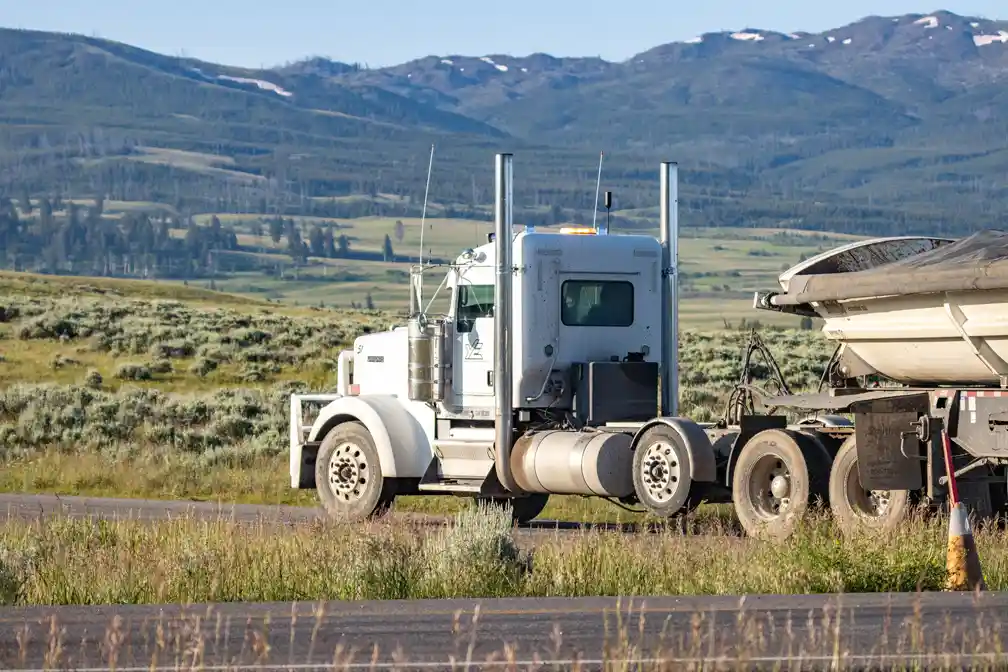
A new law in Wyoming now requires commercial truck drivers to demonstrate English Language Proficiency (ELP) before operating a commercial motor vehicle in the state. The legislation, House Bill 32 (HB0032), was adopted during the Wyoming Legislature’s 2026 Budget Session.
The bill was passed on March 5, 2026, and it became effective the same day.
The measure creates a new state requirement related to language skills for commercial vehicle operators. It also establishes penalties for drivers who fail to meet the requirement.
New ELP Requirement for Commercial Drivers
The law requires drivers operating commercial motor vehicles in Wyoming to demonstrate proficiency in English. The bill defines English proficiency using an existing federal standard found in 49 C.F.R. § 391.11(b)(2).
This federal rule sets language expectations for commercial drivers.
Under the Wyoming law, a driver may not operate a commercial vehicle within the state if they cannot demonstrate proficiency in the English language.
The requirement applies to operators of commercial vehicles. This typically includes large trucks and other vehicles used for commercial transportation.
Financial Penalties for ELP Violations
The law outlines penalties for drivers who operate a commercial vehicle but cannot demonstrate ELP.
A driver who violates the requirement will face a $1,000 fine. The driver will also be prohibited from operating a commercial vehicle within Wyoming until they can demonstrate proficiency in English.
This restriction means the driver cannot legally operate a commercial vehicle in the state until they meet the language requirement.
Additional Penalties for Ignoring the Prohibition
The law also includes stronger penalties for drivers who continue operating after being prohibited from doing so.
If a driver operates a commercial vehicle while under the prohibition, the violation becomes a misdemeanor offense.
A conviction may lead to:
- An additional $1,000 fine
- Imprisonment for up to 90 days
- Or both the fine and imprisonment
These penalties apply if a driver continues operating a commercial vehicle after being restricted under the law.
ELP Enforcement by State and Local Officers
The bill also explains who will enforce the new requirement.
The law assigns enforcement duties to several agencies and officers. These include:
- The Wyoming Highway Patrol
- Other enforcement officers designated by the state department
- Peace officers from counties and municipalities
These officers are responsible for policing the provisions of the law. They are also authorized to issue citations for violations.
Enforcement could take place during traffic stops, roadside inspections, or other interactions involving commercial vehicles.
Law Took Effect Immediately
Some new laws take effect months after they are passed. That was not the case for HB0032.
The bill states that the act became effective immediately once all steps required for the bill to become law were completed under the Wyoming Constitution.
Because of this provision, the English proficiency requirement took effect on March 5, 2026, the same day the legislation was approved.
What the ELP Law Means for Truck Drivers
Commercial truck drivers traveling through Wyoming may now face additional scrutiny related to ELP.
Drivers who cannot demonstrate English proficiency could receive a fine. They could also be prohibited from operating a commercial vehicle within the state until they meet the requirement.
If a driver continues to operate a commercial vehicle after receiving a prohibition, the driver could face misdemeanor charges. Those charges may carry additional fines or jail time.
The law gives enforcement authority to the Wyoming Highway Patrol and other peace officers. As a result, the requirement may come up during roadside inspections, traffic stops, or other enforcement activities involving commercial vehicles.
State Law Mirrors Federal Language Standard
The Wyoming legislation relies on a federal language standard already used in commercial driver regulations.
By placing that standard into state law, Wyoming created a clear enforcement process at the state level. The law also establishes specific penalties for violations.
With the law now in effect, commercial vehicle operators traveling through Wyoming must be able to demonstrate ELP in accordance with the federal standard referenced in the legislation.