Vincent ShakirJune 9, 20266 Mins read643
NHTSA Study Looks at Future Driver Monitoring Technology
Federal safety researchers are preparing to study a more advanced type of driver monitoring system (DMS) that could track more than where a driver is looking.
The National Highway Traffic Safety Administration is seeking public comment on a new information collection tied to research on what the agency calls a contextual driver monitoring system. The study does not create a new trucking rule. It also does not require truck drivers or motor carriers to install new equipment.
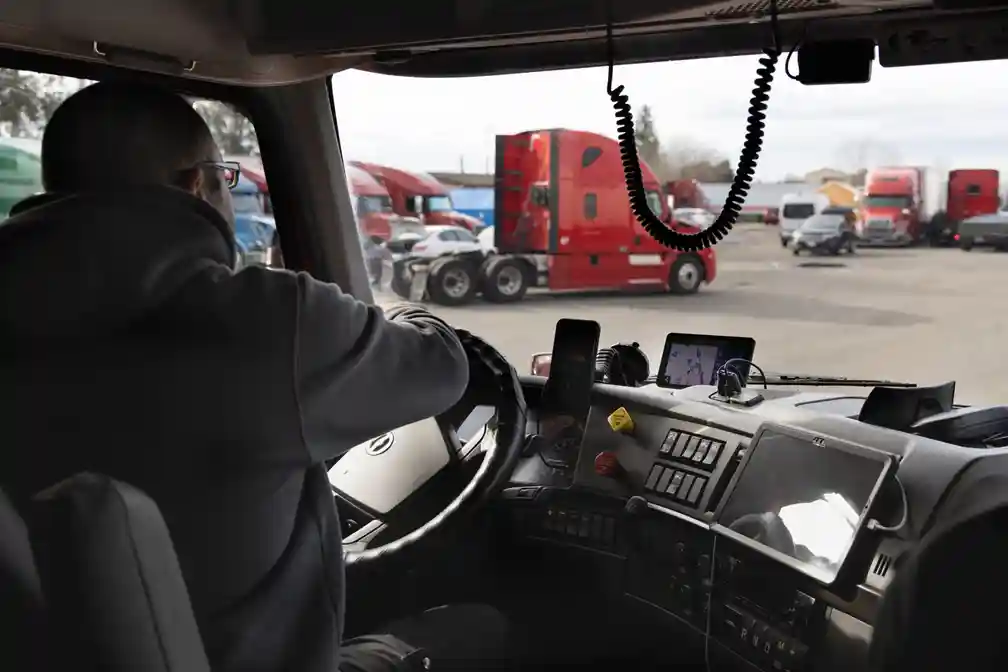
Still, the research may matter to commercial truck drivers because driver monitoring technology is already becoming more common in fleet safety programs. Many drivers now work with dash cameras, inward-facing cameras, lane alerts, fatigue alerts, and other systems that track driver behavior.
This new study points to where that technology may be headed next.
NHTSA Plans Driver Monitoring Study
NHTSA says the study will test a prototype contextual driver monitoring system in a driving simulator. The research will compare that system with a more conventional driver monitoring system.
A conventional system may use common tools such as gaze direction or head position to help identify distraction. A contextual system would go further. It would combine several data points to better understand what is happening inside and outside the vehicle.
According to the notice, the contextual system may use driver attention data, such as gaze location. It may also use physiological data, such as heart rate variability. The system may factor in vehicle movement, such as lane position, along with environmental data, such as time to collision.
In simple terms, the system would not only look at whether a driver looked away. It would also try to judge whether the driver missed a hazard, how the vehicle was moving, and whether the situation created a safety risk.
Driver Monitoring Study Does Not Create New Truck Rule
The notice is part of the federal Paperwork Reduction Act process. Before NHTSA can collect certain information from the public, it must seek approval from the Office of Management and Budget.
That means this notice is procedural. It is not a final rule or a proposed trucking mandate. It does’t change current Federal Motor Carrier Safety Administration rules for truck drivers or fleets.
The study would be voluntary. NHTSA plans to recruit members of the public in the Washington, D.C., metro area. The agency expects to contact 204 people to reach a final valid dataset of 48 participants.
Participants must be at least 18 years old, have a valid driver’s license, and drive at least 3,000 miles per year. The study is not limited to commercial truck drivers.
Even so, the technology being studied could have future importance for trucking because similar systems may later be used in commercial vehicles, fleet safety systems, or advanced driver assistance technology.
How the Driver Monitoring Test Would Work
Participants would complete four drives in a simulator. Each drive would last about 10 minutes and would use highway driving conditions and speeds.
During the drives, participants would perform a secondary task. They would recite number strings shown on a tablet near the simulator. NHTSA says this task is meant to mimic distraction from a smartphone or infotainment system.
The first three drives would include safety-relevant events, such as passing vehicles or merging traffic. The final drive would include a more serious safety-critical event. One example listed in the notice is a covered-to-revealed road obstruction that would require the driver to respond, such as braking to avoid a collision.
The distraction task would be timed so the participant is distracted just before the hazard appears. This would allow researchers to test how well the monitoring system detects risk during a critical driving moment.
Why Truck Drivers May Want to Watch This
For commercial truck drivers, the larger issue is not the small simulator study itself. The larger issue is what it says about the future of in-cab monitoring.
Many truck drivers already have concerns about driver-facing cameras and automated safety alerts. Some drivers say the systems can help prove what happened in a crash or near-miss. Others worry about privacy, false alerts, constant surveillance, or coaching based on incomplete information.
A contextual driver monitoring system could make those debates more important.
This type of technology may be able to judge distraction more accurately because it looks at the full driving situation. For example, it may be able to tell the difference between a driver glancing away during a low-risk moment and a driver missing a serious hazard.
That could reduce false warnings. It could also help fleets focus on the most serious safety events.
However, the system may also collect more sensitive information. The study includes physiological data, such as heart rate variability and electrodermal activity. Those measures could raise new questions about how much personal data should be collected from drivers and how that data could be used.
Driver Monitoring Could Affect Fleet Safety Programs
The study does not require fleets to act now. Still, it may be useful for safety departments, compliance teams, and motor carriers to follow.
Federal vehicle safety research can influence future technology development. It may also shape how manufacturers, suppliers, insurers, and fleets view driver monitoring systems.
If this kind of technology becomes more common, fleets may one day use systems that do more than record video or issue basic distraction alerts. Future tools could combine camera data, vehicle movement, roadway hazards, driver behavior, and body signals into one safety score or event review.
That could affect driver coaching, crash reviews, insurance claims, and fleet risk management.
For owner-operators, the long-term concern may be cost. If advanced driver monitoring systems become common in new trucks or insurance programs, the technology could affect equipment prices or policy requirements.
Driver Acceptance Is Part of the Study
One important part of the NHTSA study is driver acceptance.
Participants would answer several questionnaires during and after the simulator drives. These questions would ask how useful, annoying, predictable, timely, and accurate the system seemed to be. Participants would also be asked about their comfort with being monitored by the system.
That focus is important for trucking. A safety system may be effective on paper, but it can still face pushback if drivers do not trust it.
Drivers may be more likely to accept driver monitoring technology if alerts are accurate, fair, and clearly tied to real safety risks. They may be less likely to accept it if the system creates too many false warnings or feels like constant surveillance.
NHTSA’s decision to study acceptance shows that federal researchers are looking not only at whether the technology works, but also how drivers respond to it.
Privacy and Trust Could Become Key Issues
The notice does not say that physiological monitoring will be required in trucks. It also does not say fleets will be allowed or encouraged to collect this type of data.
However, the study raises questions that may become more important as vehicle technology advances.
Commercial truck drivers spend long hours in their cabs. For many, the cab is also a place to rest between shifts. Any system that expands monitoring inside the cab can create concerns about privacy, trust, and how data may be stored or shared.
If future driver monitoring systems use body signals, vehicle movement, and roadway data together, drivers and fleets may need clearer rules about what is collected, who can see it, and how it can be used.
Those questions may become especially important if driver monitoring data is used in discipline, hiring, insurance, crash litigation, or safety scoring.
What Happens Next
NHTSA is accepting public comments on the proposed information collection. After the comment period, the agency may seek OMB approval to move forward with the study.
If approved, the study would be a one-time research effort. The final results are expected to be shared with NHTSA and later published for public access through the National Transportation Library.
There is no immediate change for truck drivers or motor carriers. No new equipment is required. No new compliance deadline has been set.
Still, the study gives the trucking industry a look at the possible next step in driver monitoring technology. For truck drivers, the key issue may be whether future systems can improve safety without creating unfair alerts, privacy concerns, or a deeper level of in-cab surveillance.
As more fleets adopt advanced safety technology, the balance between crash prevention and driver trust may become one of the most important questions in the next generation of trucking equipment.
RELATED: NHTSA Now Launching Drive Sober or Get Pulled Over, Poly Trucking, LLC: Driving Excellence in American Freight, Texas Trucking Show 2026: Free Registration and More