Vincent ShakirJune 19, 20265 Mins read61
DEF Update May Help Truck Drivers Avoid 5 MPH Derates
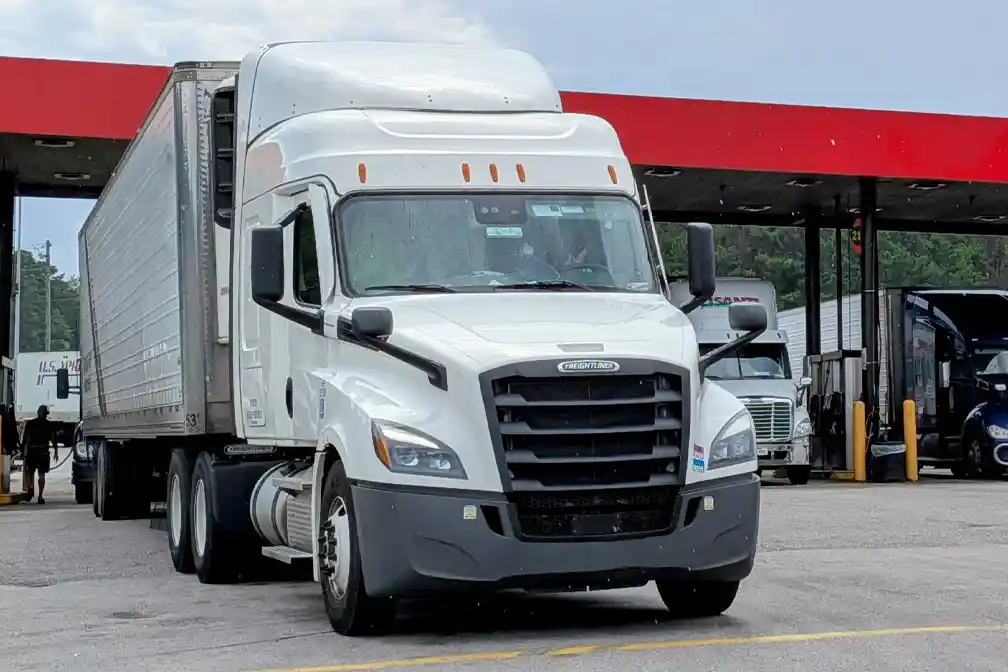
Daimler Truck North America is rolling out updated software that could help some Freightliner and Western Star drivers avoid one of the most frustrating problems on the road: a severe DEF derate that limits a truck to 5 mph.
The company announced that its latest Freightliner and Western Star vehicles equipped with Detroit engines are already shipping with the updated software. Daimler Truck North America, also known as DTNA, also began rolling out the same software to about 330,000 in-service vehicles in February 2026.
The update applies to certain Detroit DD15 engines from model years 2021 through 2025 and Detroit DD13 engines from model years 2022 through 2025. DTNA said the updates will continue throughout 2026.
The software update follows revised guidance from the U.S. Environmental Protection Agency on Diesel Exhaust Fluid, or DEF, inducements. The change does not remove emissions rules. It also does not mean drivers can ignore DEF or SCR system problems. However, it may give drivers and fleets more time and flexibility to deal with certain issues before a truck reaches its most severe speed limit.
What the Daimler DEF Derate Update Changes
DEF inducements are built into modern diesel trucks to help make sure emissions systems are working as required. When the system detects certain problems, the truck can reduce speed and power. This is meant to push, or “induce,” the driver or operator to correct the issue.
Those issues may include low DEF levels, faulty sensors, reduced performance of the Selective Catalytic Reduction system, or other emissions-related problems.
Under the updated EPA guidance, DTNA said the speed limit in final inducement has increased from 5 mph to 25 mph. The company also said the time to reach final inducement for component-related issues has been extended.
That change matters because a 5 mph DEF derate can leave a truck nearly unable to move in normal traffic. A truck limited to 25 mph is still under a serious restriction. Still, it may give a driver more ability to reach a safer location, repair facility, terminal, or truck stop.
Which Freightliner and Western Star Trucks Are Covered
The update is not for every truck on the road. DTNA said the software rollout covers about 330,000 in-service vehicles with certain Detroit engines.
The covered engines include:
- Detroit DD15 engines from model years 2021 through 2025
- Detroit DD13 engines from model years 2022 through 2025
The update applies to Freightliner and Western Star vehicles equipped with those Detroit engines.
Newer Freightliner and Western Star trucks with Detroit engines are already shipping with the updated software, according to DTNA. In-service vehicle updates began in February 2026 and are expected to continue through the rest of 2026.
For drivers and owner-operators, the key question is whether a specific truck is included and whether the update has already been installed. Fleets may need to check with their maintenance departments, dealers, or service networks to confirm the status of each unit.
What the DEF Derate Update Does Not Change
The update does not end DEF requirements. It also does not remove the need to repair emissions system problems.
DTNA said emissions compliance remains mandatory. Vehicles must still be repaired to meet environmental standards. The company also said the logic for final inducements related to DEF tank level remains unchanged.
That is an important point for drivers. The update may give more time for certain component-related problems, but it does not appear to change what happens when a truck runs low or out of DEF.
Drivers still need to watch DEF levels, pay attention to warning lights, and report system problems when they occur. Fleets and owner-operators still need to repair faulty sensors, SCR issues, or other emissions system problems.
Why This DEF Derate Change Matters to Truck Drivers
DEF system problems can quickly turn into major road delays. A driver dealing with a derate may miss a delivery window, lose driving time, or be forced to stop in a poor location. In some cases, the truck may need roadside service or towing.
For company drivers, the update may reduce the chance of being stuck with a truck that can only move at 5 mph during certain DEF or SCR component problems. That could make it easier to get to a safer place or reach service support.
Owner-operators may feel the impact even more. A DEF derate may mean lost revenue, missed loads, repair costs, towing expenses, or extra time off the road. The updated software will not prevent every DEF problem, but it may reduce some of the disruption caused by severe inducement limits.
Small trucking businesses may also benefit from the change. More time before final inducement could allow a truck to be routed to a planned service location instead of being forced into an emergency repair.
SBA Says DEF Problems Have Hurt Small Businesses
The U.S. Small Business Administration welcomed DTNA’s decision to equip vehicles with the updated software.
SBA Administrator Kelly Loeffler said small businesses, including farmers, truckers, and construction workers, have faced costs from unreliable DEF systems through expensive repairs and downtime. She said the SBA had been calling on original equipment manufacturers to implement the EPA’s recent DEF guidance.
Loeffler described DTNA’s software update as a step that could give operators more reliability while reducing costs.
That statement shows why this issue has drawn attention beyond truck manufacturers and regulators. DEF-related downtime can affect many small businesses that rely on diesel-powered equipment, including trucking operations.
Fleets May Need to Track the Update
Motor carriers and fleet maintenance teams may need to review which trucks are eligible for the software update. A fleet with Detroit-powered Freightliner or Western Star trucks may have some units already updated and others still waiting.
That could create a short-term tracking issue for maintenance departments. Fleets may need to confirm engine model years, schedule dealer service, and make sure drivers know what the update does and does not change.
Safety departments may also care because severe derates can create roadside risks. A truck forced down to very low speed may become a hazard, especially on highways, ramps, bridges, or rural roads with limited shoulders.
The updated 25 mph final inducement is still a major restriction. Even so, it may give drivers more control than the previous 5 mph limit in some situations.
DEF and SCR Systems Still Must Work
Modern diesel engines use DEF as part of the SCR system. SCR technology helps convert nitrogen oxides into nitrogen and water. This allows trucks to meet EPA emissions standards.
The new software does not remove that system. It changes the inducement parameters used when some problems are detected.
That distinction is important. Drivers may see this as relief from one of the harshest DEF-related outcomes, but it should not be viewed as permission to delay repairs for too long. The truck still needs to be fixed when the emissions system has a problem.
A Practical DEF Derate Change for Detroit-Powered Trucks
DTNA said it has informed its dealer network to support the software rollout. That should help with more consistent service as updates continue through 2026.
For drivers, the most important part of the announcement is simple: certain Detroit-powered Freightliner and Western Star trucks may now have more time before reaching the most severe DEF derate for some component problems.
The change does not eliminate DEF issues. It does not remove emissions rules. It does not apply to every truck. But for drivers and fleets using covered Detroit DD13 and DD15 engines, the update may help reduce the impact of one of the trucking industry’s most common emissions-system frustrations.
As the rollout continues, drivers and owner-operators with eligible trucks may want to confirm whether their vehicle has received the updated software and how it affects their specific engine.