dayileyvasMay 4, 20262 Mins read366
FBI Warns Trucking Industry About Rising Cyber Cargo Theft
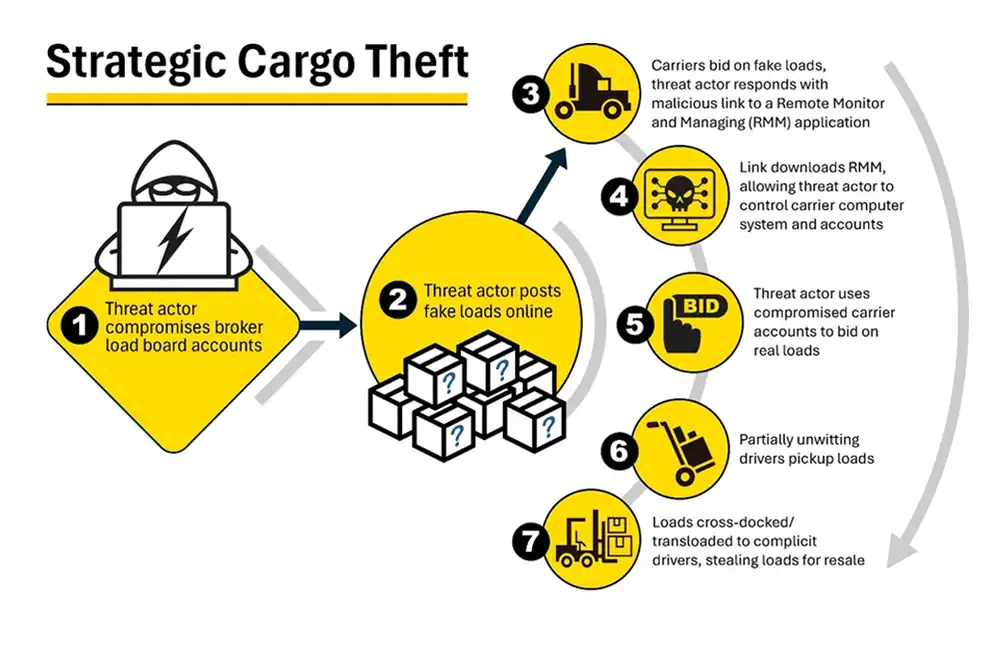
The FBI is warning the trucking industry about a sharp rise in cyber-enabled strategic cargo theft, a growing crime trend that is costing the freight sector hundreds of millions of dollars. In a public service announcement released on April 30, the FBI said cybercriminals are increasingly using phishing emails, fake websites, compromised carrier accounts, and loadboard fraud to steal freight shipments. These schemes target businesses across the transportation chain, including carriers, brokers, shippers, and insurers.
The warning comes as cargo theft losses in the United States and Canada climbed to nearly $725 million in 2025, a 60% increase from 2024. Confirmed theft incidents also rose 18%, while the average value of each theft jumped 36% to nearly $274,000.
How Cyber Cargo Theft Works
According to the FBI, these cargo theft operations often begin with a cyberattack.
Criminals may send spoofed emails that appear to come from a legitimate broker or carrier. Those emails often include links to supposed broker agreements, shipment documents, or complaints about poor service ratings. When clicked, those links can lead to phishing websites designed to install malicious software on company computers.
Once criminals gain access, they may:
- Log into legitimate carrier or broker systems
- Use compromised accounts on freight load boards
- Post fake freight listings
- Accept real shipments while posing as a legitimate carrier
- Change delivery destinations
- Redirect loads for theft and resale
In some cases, the FBI says criminals even alter carrier contact information in FMCSA records and update insurance details to make fraudulent bookings appear legitimate.
That can allow stolen freight to move under a real carrier’s authority without that carrier knowing anything is wrong.
Drivers May Be Pulled Into the Scheme Without Knowing It
One important warning in the notice is that some truck drivers may become partially unwitting participants.
For example, a driver may accept what appears to be a normal load assignment, only to later discover:
- The pickup paperwork was altered
- The delivery location changed unexpectedly
- Freight was transferred roadside or at an unusual warehouse
- The shipment was part of an illegal double-brokering operation
The FBI notes that suspicious freight transfers can include cross-docking or transloading, where cargo is quickly moved from one truck to another before disappearing into resale channels.
Warning Signs Truck Drivers and Carriers Should Watch For
The FBI says several red flags may point to a cyber cargo theft scheme:
- Emails using free email providers instead of company domains
- Slightly altered company website links or web addresses
- Messages asking users to download forms or agreements through shortened links
- Unexpected claims of poor service reviews that include clickable links
- Brokers contacting a carrier about loads that the carrier never booked
- Phone numbers that frequently change or rely on internet calling apps
- Unusual delivery changes after pickup
For drivers, last-minute route changes or requests to unload freight at unofficial locations should raise questions.
How the FBI Says the Industry Can Protect Itself
The FBI recommends carriers, brokers, and drivers verify shipment details through more than one communication channel before moving freight.
The agency also suggests keeping detailed records of:
- Driver identification
- CDL information
- Truck and trailer numbers
- License plate numbers
- DOT and motor carrier numbers
- Contact names and phone numbers
- Photos of vehicles and drivers when possible
That documentation can help investigators track theft rings and recover cargo.
Cargo Theft Is Becoming More Sophisticated
Cargo theft is not always a physical crime involving stolen trailers from truck stops. Increasingly, it starts online.
As criminals become more sophisticated, the trucking industry is facing a growing threat that mixes cybercrime, identity theft, load fraud, and cargo diversion into one operation.
For truck drivers, brokers, and carriers, stronger verification practices may become just as important as physical cargo security.