Vincent ShakirMay 19, 20253 Mins read1.4k

Aurora Innovation Adjusts Driverless Operations with New Safety Update
Human Observer Moves to Front Seat in Updated Driverless Operations
Aurora Innovation has made a change to its driverless trucking operations in Texas. This update comes just two weeks after launching its commercial service with no driver in the front seat. The company announced that it will now place a human observer in the driver’s seat on some trips.
This observer will not operate the truck. The Aurora Driver system will remain fully in control of all driving tasks. Previously, the observer had been seated in the back of the cab.
The change is based on a request from PACCAR. PACCAR makes the base truck used in Aurora’s operations. The company asked Aurora to move the observer due to certain prototype parts in the vehicle. Aurora said its testing shows that having a person in the front seat is not needed for safety.
The company has run nearly 10,000 safety tests. Its technology has also passed 2.7 million validation checks. Aurora said these results prove the truck can operate safely on public roads.
Even so, Aurora agreed to PACCAR’s request. The company said it wanted to respect the views of its long-time partner. “We respected their request and are moving the observer from the back seat to the front seat. This observer will not operate the vehicle,” said Aurora CEO Chris Urmson. “This change has no impact on our near, mid, or long-term development plans.”
Driverless Operations Continue Between Dallas and Houston
Aurora launched its commercial driverless operations in April 2025. Its trucks now haul freight between Dallas and Houston. These are Class 8 trucks that operate without a person driving.
Since the launch, the Aurora Driver system has completed over 6,000 driverless miles on this route. The company says this is the first regular freight service using autonomous trucks on public highways in the United States.
Aurora plans to expand its routes later this year. The next target locations are El Paso and Phoenix.
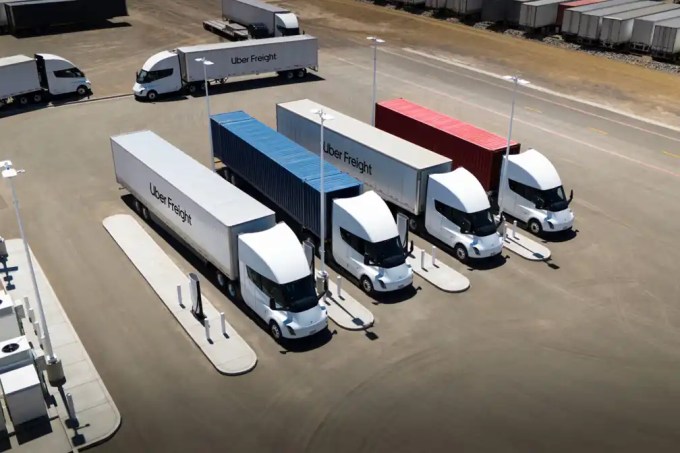
Aurora’s first customers include Uber Freight and Hirschbach Motor Lines. Both companies worked with Aurora in pilot programs before moving to fully autonomous service.
Safety Is Still a Top Priority for Aurora Innovation
Before launching driverless operations, Aurora went through a full safety review. The company developed a detailed safety case. This case included documents and evidence showing that its system was ready for public roads.
Aurora also published a Driverless Safety Report. This report explains how the Aurora Driver handles key safety tasks. These include emergency responses, cybersecurity, and remote help.
Aurora shared this information with several government agencies. These include the FMCSA, NHTSA, NTSB, and the Texas Department of Transportation. State and local agencies in Texas also reviewed the safety plans.
The company uses a system it calls “Verifiable AI.” This blends artificial intelligence with built-in safety checks. The checks help the truck follow road rules and act safely in different driving situations.
Each Aurora truck also has backup systems. These cover the brakes, steering, power, cooling, computing, and communication. The design allows the truck to keep running safely even if one system stops working.
Aurora Innovation Responds to Partner Feedback
Aurora said this update does not mean it has lost confidence in its technology. Instead, the company says the move shows its willingness to work with key partners.
Aurora stressed that its driverless operations are still moving forward as planned. The timeline to expand routes remains the same.
“This update is about maintaining trust and transparency with the companies that help us bring autonomous trucking to life,” said Urmson.
Company Previously Filed Lawsuit Against FMCSA
Earlier this year, Aurora Innovation made headlines for another reason. In January 2025, the company filed a lawsuit against the Federal Motor Carrier Safety Administration (FMCSA). The lawsuit challenges how FMCSA applies its rules to autonomous trucks.
Aurora says current rules are designed for human drivers. The company argues that these rules do not fit autonomous vehicles. The case focuses on how regulations impact areas like hours-of-service and driver monitoring.
Aurora claims that some of the FMCSA’s requirements create unfair roadblocks for driverless trucks.