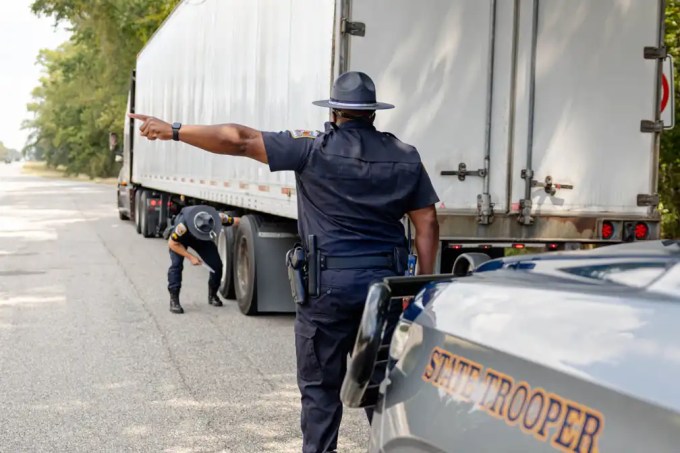
574 Commercial Trucks OOS in One-Day Brake Blitz
In April, CVSA inspectors placed 574 commercial trucks out of service for brake violations during a one-day brake safety enforcement blitz across North America.
 Vincent ShakirMay 20, 20265 Mins read322
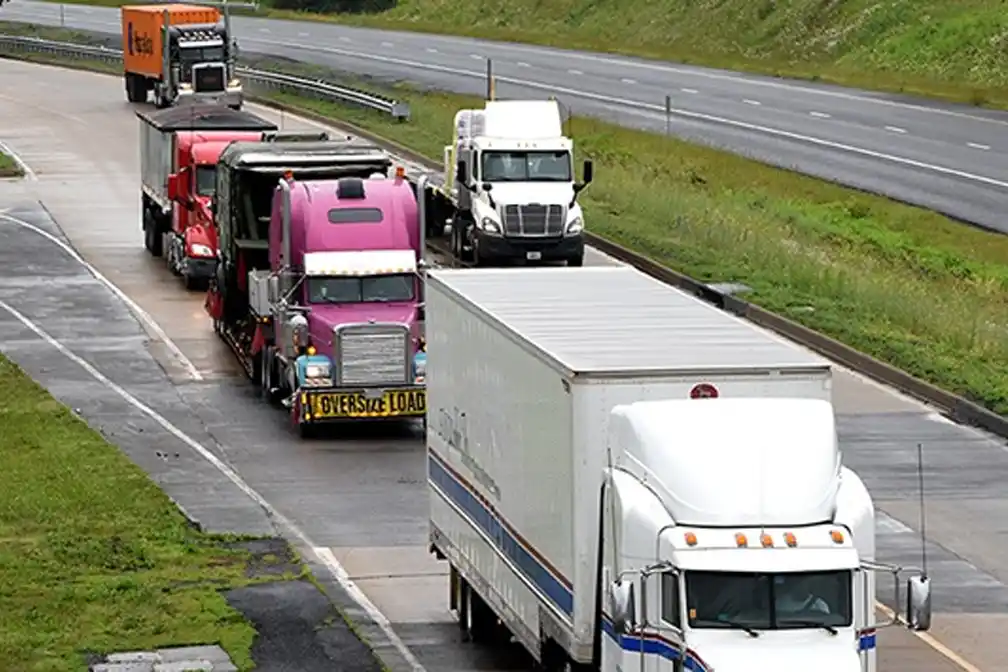
574 Commercial Trucks OOS in a One Day Brake Blitz
Nearly 600 commercial trucks were removed from North American roadways in one day after inspectors found brake-related violations serious enough to place the vehicles out of service.
The Commercial Vehicle Safety Alliance said certified inspectors conducted 4,021 inspections during this year’s Brake Safety Day, which was held on April 14. The one-day inspection and data-gathering effort was not announced to the public ahead of time.
Out of all vehicles inspected, 574 commercial trucks were restricted from travel due to brake-related out-of-service violations. That equals a 14.3% brake out-of-service rate.
For commercial truck drivers, owner-operators, fleets, and maintenance teams, the results offer a clear warning ahead of CVSA’s next brake enforcement campaign. The group’s seven-day brake safety campaign is scheduled for Aug. 23-29.
Brake Safety Day Inspections Found Serious Defects
A commercial motor vehicle is placed out of service when an inspector finds a safety violation serious enough to make continued operation hazardous. Out-of-service orders are meant to prevent crashes by keeping unsafe vehicles off the road until the problem is addressed.
According to CVSA, 3,447 vehicles inspected during Brake Safety Day did not have any brake-related out-of-service violations. That means 85.7% of inspected vehicles passed without a brake-related OOS violation.
Some vehicles that did not have any critical vehicle inspection items may have received a CVSA decal.
Still, the number of brake-related OOS violations was large enough to show that brake maintenance remains a major roadside inspection issue across the trucking industry.
Why Commercial Trucks Being Placed OOS Matters
Brake violations can quickly turn into real problems for commercial truck drivers.
When a truck is placed out of service, the driver cannot keep operating that vehicle until the issue is fixed. That can lead to delays, missed delivery windows, lost miles, and added stress for drivers working under tight schedules.
For company drivers, brake maintenance decisions may be handled by the carrier or shop. But the inspection happens on the road, and the driver is the one stopped at the roadside when the violation is found.
For owner-operators, the impact can be even more direct. A brake-related OOS order can mean repair costs, downtime, lost revenue, and possible service calls away from home.
The results also matter for fleets and safety departments. Brake violations can affect operations, maintenance planning, and compliance records. With another brake enforcement campaign coming in August, the April results give carriers and drivers a better look at the kinds of brake issues inspectors are finding.
Defective Brakes Were a Major Problem
One of the largest violation categories involved vehicles that met the 20% defective brakes out-of-service criterion.
Inspectors identified 313 commercial trucks that met that standard. This applies when 20% or more of the vehicle’s brakes, or the brakes on a combination of vehicles, have a condition that impairs braking ability enough to be considered defective.
That number is important because it shows that many of the violations were not minor paperwork issues. They involved brake conditions serious enough to sideline the vehicle.
CVSA also reported several other brake-related out-of-service findings, including:
- 121 violations related to brake hoses and/or tubing
- 47 vehicles with steering axle out-of-service violations
- 40 vehicles that failed an air loss rate test
- 193 other out-of-service brake violations
Those other violations included issues such as an inoperative tractor protection system, hydraulic or electric brake violations, inoperative parking or emergency brakes, and inoperative low-air warning devices.
Inspectors Focused on Drums and Rotors
This year’s Brake Safety Day placed special emphasis on drums and rotors.
Inspectors identified 43 drum and rotor violations during the one-day effort. Of those, 21 were out-of-service violations.
The violations included broken rotors, rusted rotors, metal-to-metal contact, and broken drums.
Most of the drum and rotor violations involved air disc brakes. Inspectors found:
- 8 broken rotor violations on air disc brakes
- 24 rusted rotor violations on air disc brakes
- 1 metal-to-metal contact violation on air disc brakes
- 9 broken drum violations on S-cam brakes
- 1 metal-to-metal contact violation on hydraulic brakes
In total, air disc brakes accounted for 33 of the drum and rotor violations. S-cam brakes accounted for 9, while hydraulic brakes accounted for 1.
Commercial Trucks Inspected Across North America
The Brake Safety Day inspections took place across 47 jurisdictions in Canada, Mexico, and the United States.
The United States had the largest number of inspections, with 3,301 inspections and 460 brake out-of-service violations. That produced a brake OOS rate of 13.9%.
Canada reported 716 inspections and 112 brake out-of-service violations, for a brake OOS rate of 15.6%.
Mexico had 4 inspections and 2 brake out-of-service violations, for a brake OOS rate of 50%. Because the number of inspections in Mexico was very small, that rate is based on only a few inspections.
Combined, inspectors conducted 4,021 inspections and found 574 brake out-of-service violations involving commercial trucks.
Brake Testing Machines Also Found Failures
Ten U.S. jurisdictions used a performance-based brake tester, also known as a PBBT, during Brake Safety Day.
A PBBT is a machine that checks the braking performance of a commercial motor vehicle. Under U.S. Federal Motor Carrier Safety Regulations and CVSA’s North American Standard Out-of-Service Criteria, vehicles must meet a minimum braking efficiency of 43.5%.
Inspectors conducted 349 inspections using PBBT machines. Of those vehicles, 26 failed to meet the required minimum braking efficiency rate and were placed out of service.
That equals a 7.45% failure rate among vehicles tested with a PBBT.
For drivers and fleets, this is another reminder that brake enforcement is not limited to visible parts alone. Inspectors may also use testing equipment to measure actual braking performance.
Most Inspections Were Level I Inspections
Most of the inspections conducted during Brake Safety Day were North American Standard Level I Inspections.
CVSA said 3,643 inspections, or 90.6% of the total, were Level I Inspections.
A Level I Inspection is a detailed 37-step inspection. It reviews the driver’s operating requirements and checks the vehicle’s mechanical condition. It is also the most commonly used inspection type overall.
That matters because Brake Safety Day was not limited to a quick brake check. In many cases, inspectors were conducting full roadside inspections that looked at both the driver and the vehicle.
Commercial Trucks Face Another Brake Campaign in August
Brake Safety Day is part of Operation Airbrake, a CVSA program focused on improving commercial motor vehicle brake safety across North America.
The next major brake enforcement event will be CVSA’s seven-day brake safety campaign, scheduled for Aug. 23-29.
For truck drivers, owner-operators, and fleets, the April results offer a useful preview. Inspectors found a wide range of brake problems, including defective brakes, brake hose and tubing violations, steering axle brake violations, air loss failures, and brake-performance failures.
The main takeaway is clear: brake issues remain one of the major reasons commercial trucks are placed out of service.
With Brake Safety Week approaching, the latest results give drivers and carriers time to review brake condition, address known defects, and reduce the risk of roadside downtime during the next enforcement campaign.
RELATED: Ambient IoT: New Sensor Tech Targets Cargo Theft, CMV Inspections Results: +1,100 Out of Service Orders & DOJ Now Drops Criminal Prosecutions in Diesel Delete Cases