

2024 CVSA Hazmat Inspection Road Blitz: Key Safety Findings
The Commercial Vehicle Safety Alliance (CVSA) held an unannounced safety event this past June across North America. Inspectors focused on vehicles carrying hazardous materials (HM) and dangerous goods (DG) to keep the roads safe. Over five days, they inspected nearly 4,000 vehicles to find and fix any problems that could lead to dangerous incidents.
What the Inspections Found
The HM/DG Road Blitz took place from June 10-14. Inspectors checked 3,929 vehicles, and 1,009 had no serious issues. These vehicles earned a CVSA decal, showing they met all safety standards. However, 576 vehicles had violations, and inspectors took these trucks off the road until the problems were fixed.
Types of Packages Inspected
Inspectors reviewed a total of 4,095 packages with hazardous materials. The packages included:
- 1,488 small containers, or “non-bulk packages”
- 2,218 large containers, like cargo tanks
- 389 other large packages
These different types of containers carry various dangerous materials, each requiring specific safety measures to prevent spills and leaks.
Hazmat Inspection Violations Found by Region
The inspection event involved 45 regions across North America. Here’s what inspectors found in the U.S. and Canada:
United States
In the U.S., many problems were related to paperwork and securing cargo. Inspectors found:
- 108 cases of incomplete paperwork
- 72 problems with loading and securing cargo
- 40 issues each with vehicle placards and container markings
These rules, set by the U.S. Pipeline and Hazardous Materials Safety Administration (PHMSA), aim to reduce the risks of moving hazardous goods.
Canada
In Canada, the top issue was with training certificates. Inspectors found 79 cases where workers didn’t have the needed training proof. Other issues included:
- 61 cases of missing or incomplete paperwork
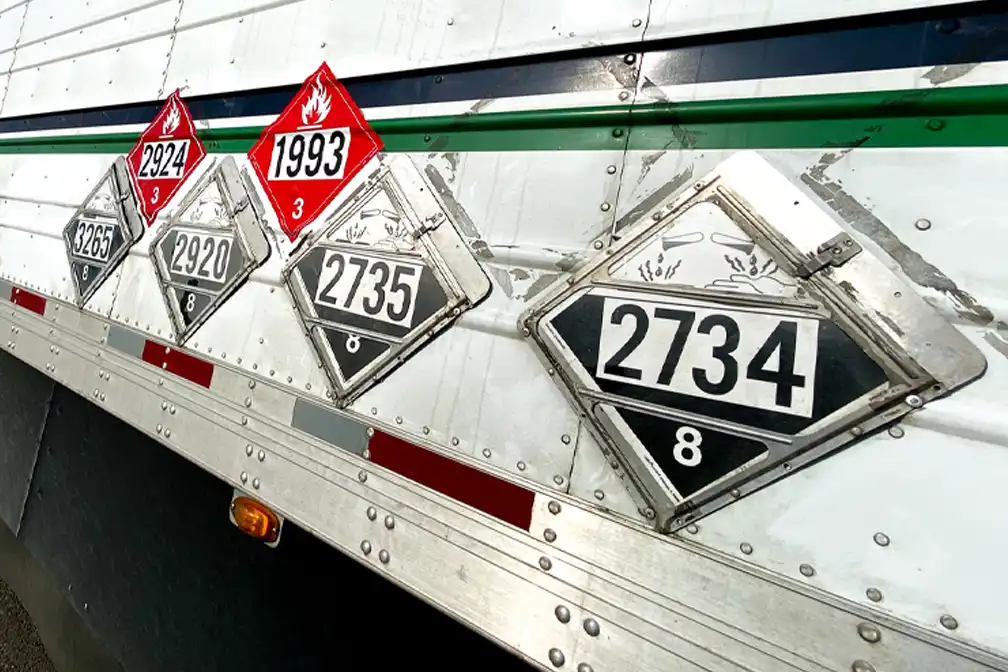
- 46 placarding problems on large containers
Canada’s Transportation of Dangerous Goods (TDG) rules help keep the public safe, as millions of hazardous shipments cross the country every year.
Loading and Securing Cargo
One of the main concerns during the blitz was improper loading and securing of cargo, which led to 116 violations across North America. Dangerous goods must be tightly secured to prevent them from moving or leaking. Inspectors found 19 cases where packages were leaking, which shows the risks of poor loading practices.
Types of Hazmat Inspections Performed
The blitz covered nine types, or “classes,” of hazardous materials. The most common ones inspected were:
- Flammable liquids – Class 3: 5,559 inspections
- Flammable and non-flammable gases – Class 2: 2,537 inspections
- Corrosive substances – Class 8: 2,478 inspections
These classes include items like fuel, chemicals, and acids. Each of these types needs specific handling to prevent accidents.
The Importance of Safety and Compliance
The CVSA Road Blitz shows why strict safety practices are essential in transporting hazardous materials. Along with physical checks, inspectors reviewed paperwork, securement, and training compliance. Following these rules lowers the risk of accidents and keeps everyone safer.
In the U.S., inspectors found 93 undeclared packages, meaning these hazardous materials weren’t labeled. PHMSA reports nearly 1,500 incidents happen each year because of undeclared hazardous shipments, which can be very dangerous if handled wrong.
CVSA’s Role in Road Safety
The HM/DG Road Blitz, supported by safety agencies in the U.S., Canada, and Mexico, highlights the dedication of CVSA’s Hazardous Materials Committee. This event works to:
- Take unsafe vehicles off the roads
- Highlight the safe practices of drivers and carriers
- Support inspectors who enforce safety standards
The CVSA HM/DG Road Blitz helps make sure hazardous goods are transported safely. It protects both the public and the environment by keeping safety a top priority.
 Vincent ShakirNovember 13, 20242 Mins read1.4k


